Tuesday, July 30, 2013

Superior Person's Tuesday!

Flubdub, n. A glorious nineteenth-century word meaning "bombastic language." Use it together with "flimflam" (humbug, idle talk).


The conversation quickly devolved into flubdub and other pretentious nonsense.

Each Tuesday, we’ll offer up a Superior Word for the edification of our Superior Readers, via the volumes of the inimitable Peter Bowler. You can purchase all or any of the four Superior Person’s Books of Words from the Godine website. Flubdub appears in the Second.

Wednesday, July 24, 2013

A Little Bit Country, A Little Bit Shakespeare: The Marriage of Music and Writing

By Christina Freitas

Henry Wadsworth Longfellow once said, “Music is the universal language of mankind.” A pretty hefty statement, I think, for a man engaged in the art of making his words serve the same purpose. Yet there’s an intrinsic truth to his words, one that has been noted by countless artists, a creative mesh of two extraordinarily similar artistic spheres. Not all music has lyrics, but all language has a rhythm, a beat, a musical quality of its own. It’s a match made in heaven. Or more accurately, a match made in imaginative minds.


"I was raised on rock."
- The Scorpions
Inspiration doesn’t just evolve from one mode of thinking; it trickles from several tributaries, integrating its influence in countless ways, through art, literature, history, science. From worlds so closely intertwined, an author can garner as much meaning from a three-minute song as a country singer can wrangle from the depths of a twenty-line poem. This symbiosis is evident in  It’s Only Rock and Roll: An Anthology of Rock and Roll Stories by Janice Eidus and John Kastan. This title combines the legacy of rock and roll, the pulsing power of its music, and echoes these feelings through language, built on characters and conflicts, rather than melodious, sometimes jarring, chords splayed across bars and time signatures.

There’s a lot to love in music and literature, and I’m not shy in admitting that I've always felt music lends itself to writing. Not just lyrics, which can serve as stories all their own, but also the very feel of the beat drumming inside our heads, stirring up all sorts of chaotic creativity until we cannot help but let it explode, let it fall on the page.

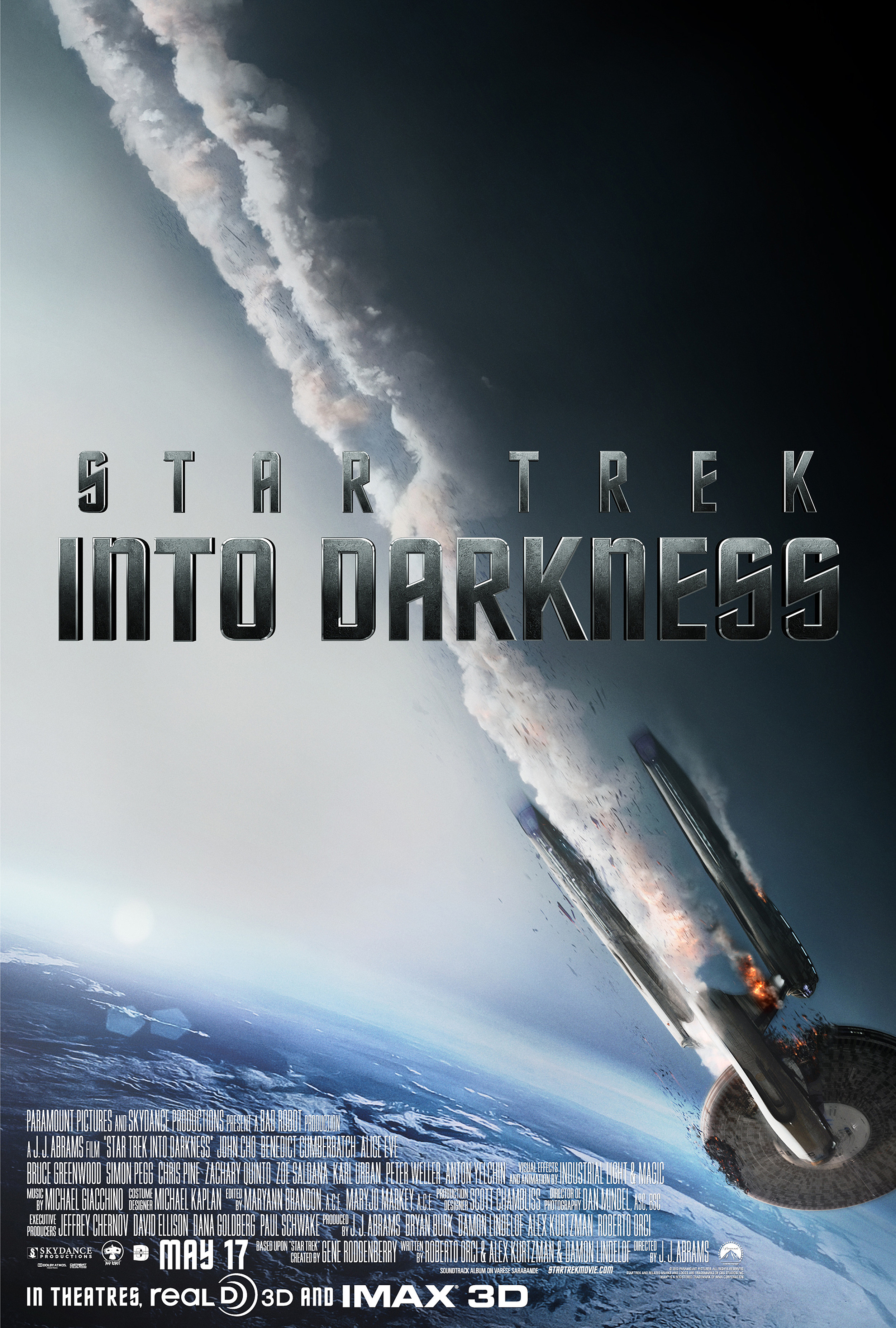
I don't make Vulcan symbols
while I'm writing. I promise.

When I write, I prefer to do so under the backdrop of some melody, one that reflects the mood I’m searching for, the scene I’ve crafted. My heart beats for rock and roll, the fevered thump of the drum, the rasp and wail of the guitar, the continuous energy emanating from every chorus, every chord. Of course, that doesn’t mean I completely ignore other musical styles. You’re actually more likely to find me typing away to an orchestral soundtrack than anything else! Which is a little odd, considering my most recent soundtrack obsession is that of Star Trek Into Darkness, and I don't quite write science fiction.

Still, I like to profile my characters in song, create a soundtrack that reflects on their lives, their personalities and their tastes. Dig around inside their head. Map out a story of their life, but in music. In many ways, I feel music can do that – tell the story of a man, or a woman, in just a few minutes, little snapshots, novellas from the pen of a musical writer. It’s no wonder that authors and artists have found common ground over the years.

Of course, music and writing are not entirely the same. There are intricacies inherent to music that cannot be duplicated on the page, just as there are limits to how much a story can translate into three or four musical minutes. One can never replace the other and for all their similarities, we would suffer as much in a world without music as we would suffer in a world without books. Luckily, we can have both, and still admire the thin trails connecting so many artistic expressions across the years, just as Eidus and Kastan have done in their brilliant anthology of a musical era that just keeps on rolling.


Do you have any thoughts on the wonderful collaboration of music and books? Are there any particular songs, or a specific genre of music, that have ever inspired you to write, or served as a suitable soundtrack to a book you’re reading? Share your comments with us here or join us on Twitter @GodinePub. For more information about It’s Only Rock and Roll, please be sure to visit our website!

Tuesday, July 23, 2013

Superior Person's Tuesday!

Pandiculation n. Stretching and yawning.

After a rough day at the zoo, this little guy was due for some pandiculation.

Each Tuesday, we’ll offer up a Superior Word for the edification of our Superior Readers, via the volumes of the inimitable Peter Bowler. You can purchase all or any of the four Superior Person’s Books of Words from the Godine website. Pandiculation appears in the First.

Wednesday, July 17, 2013

A Trip Down the Rabbit Hole: The Edinburgh International Book Festival Kicks Off

By Christina Freitas

On August 10th, Edinburgh will erupt in literary fever, ushering in a tradition now thirty years strong. Tourists will flock to this scenic destination for a chance to meet and discuss the future of books, literature, and the craft of writing with world-renowned authors and future rising stars. And it’s all part of the much larger Edinburgh Fringe Festival, an annual celebration of the arts in all its forms, complete with over 2,500 performances and events for its visitors to enjoy.

Thirty years, and still going strong!

Founded in 1983, the Edinburgh International Book Festival remains one of the world’s largest literary celebrations. Extending over the course of two weeks, from August 10th through the 26th, the Festival welcomes tourists, readers and writers from all corners of the globe to a rousing collection of book-related events. This year, the Festival will mark thirty years of extraordinary history not just in the realms of art and literature, but in politics and science as well, particularly for Scotland. Visitors are privy to stirring talks about what the past can teach us today, and how our future may in turn be shaped by it.

There will be reading workshops, where authors join fellow readers to critically discuss some of their favorite reads. Alan Durant (Blood, Publish or Die) will host one such talk on August 10th, to discuss the lasting legacy and message of The Catcher in the Rye by J.D. Salinger. Events will touch not just the palms of several literary genres, but also other artistic realms such as music, in events uncovering the inspiration many famous authors, and their works, have gained from the world of music.

And of course, there will be guest speakers. Some of the most notable authors present at the 2013 Festival are Margaret Atwood (The Blind Assassin, The Handmaid’s Tale) and Neil Gaiman (Neverwhere, American Gods). If you’re feeling a little faint at the thought of hearing one of these authors speak, you may want to find a seat. Fast. On the final day of the festival, these legendary authors will share the same stage and engage in a joint conversation about their works, their inspirations and the world of writing.


It’s a relatively young tradition, but it’s one that the world sorely needs. We cannot afford to forget the significance that every book presents to our world, the way we view it, how we shape it. Books have eyes and ears, molded by those who revived the inky hearts at their cores. They see the world, they extract pieces of the puzzle and they create a mosaic of thoughts, ideas, and images, to help unravel life’s greatest puzzles, the ones that face us all. They touch us, often in ways we don’t realize.

And for that we should thank the writers who brought them to us and offer a standing ovation to the writers who will rise today and tomorrow, to carry on the marvelous tradition of storytelling, for our world and the one that will follow. Ten years from now, I hope the Festival will be celebrating its fortieth anniversary, celebrating even more authors, the ones who stunned us and impressed us, continuing the tradition of honoring their works, and welcoming with open arms the next generation of great writers for years to come.

Has anyone ever attended the Edinburgh Festival, or know anyone who has? You can share your thoughts or stories in the comment section below, or join us on Twitter @GodinePub. For more information about the Edinburgh Fringe Festival, please visit their website. And for extended coverage of the Edinburgh International Books Festival, feel free to peruse its homepage.

Tuesday, July 16, 2013

Superior Person's Tuesday!

Noctivagant adj. Wandering by night.

After moving to the city, Janet developed some noctivagant behavior.

Each Tuesday, we’ll offer up a Superior Word for the edification of our Superior Readers, via the volumes of the inimitable Peter Bowler. You can purchase all or any of the four Superior Person’s Books of Words from the Godine website. Noctivagant appears in the Second.

Monday, July 15, 2013

Movie Magic: Filming at David's House!

Crew members film The Judge in David's driveway.
Image credit: Bella English/Globe Staff

With yesterday's article in the Boston Globe, it appears the cat is out of the bag: for the past few weeks, David's home in Milton has been one of the filming locations for The Judge, a new movie starring Robert Downey, Jr., and Robert Duvall (among others)! That's right – the house that Robert Duvall's character lives in in the movie is in fact David Godine's house in real life.

"How did this happen?!" you might ask. Essentially, people connected to the film were scouting locations around Massachusetts and happened to come across David's house. They liked it, so they asked if they could use it in a movie – it didn't take a whole lot of convincing for David and his wife Sara to say yes.

The movie will be released in 2014, and the synopsis, according to the Internet Movie Database, is:
A successful lawyer [Downey, Jr.] returns to his hometown for his mother's funeral only to discover that his estranged father [Robert Duvall], the town's judge, is suspected of murder.
I got to visit the set myself, and witness firsthand the craziness that comes along with filming at a residential location. The morning I was there, they spent hours filming a single scene that will probably only be about 30 seconds long in the final movie (assuming it is not cut). They made sure to film every angle imaginable - a close up on Robert Downey, Jr., focused on him but from a little further away, over his shoulder looking at his neighbor, a close up of the neighbor, etc. (I can't give away details about the scene, though, sorry!) They ran each shot at least 3 to 4 times, and RDJ seemed to be improvising variations of his lines in a few of the takes.

L to R: Stunt coordinator Keith Campbell, David, and David's wife, Sara Eisenman
Image credit: Bella English/Globe Staff
At one point during the morning, David and I were in his kitchen when one of the movie's Production Assistants came in to see if David would let them use some of his mugs – apparently the ones they had planned to use were no longer making the cut. The PA looked through David's cabinets and picked out a few options. She remarked that she couldn't use most of the mugs because they had logos or images on them that they would have to receive permission to use and David steered her toward a mug with the David R. Godine, Publisher name and logo on it. "I'm in charge of permissions," I told her, "and I can officially grant permission for you to use the mug with our logo." She laughed, but she took it as one of three options – "we'll see which one Robert Downey, Jr., picks" – and that was that. Rumor has it that RDJ actually did pick the Godine mug, so keep your eyes peeled when you see The Judge in theaters next year!

If you missed the article in yesterday's Globe, you can read it online here.

Wednesday, July 10, 2013

June News and Review Round Up

Here at David R. Godine, Publisher, we strive to produce high quality books above all else. So, when our books and authors are praised, we hope you'll forgive us for acting like proud parents. Please join us in celebrating the recent success of a few of our talented authors.

In recent news, Joe McKendry attended Winchester Town Day in Winchester, Massachusetts on June 1st to promote One Times Square and Beneath the Streets of Boston. He can be seen below holding Beneath the Streets of Boston and standing with fellow author Neal Sanders. A fun time was had by all, and we at the office sure wish we could have been there! You can get your own copy of McKendry's Beneath the Streets of Boston from our website.

Joe McKendry (left) and Neal Sanders

We love to see our wonderful authors and translators getting the recognition that they deserve. Library Journal praised and recommended J. M. G. Le Clézio's The African, specifically highlighting C. Dickson's skillful translation:
Le Clézio, recipient of the 2008 Nobel Prize in Literature, recalls the emotive and evocative African experience of his youth. . . In the process of writing this reminiscence and selecting some of his father's photos to accompany the text, Le Clézio comes to cherish a life subsumed by Africa. None of the photos include his father, and the book never mentions the man's name. VERDICT This is a fluid translation from the French version published in 2004 and a fine introduction to a prolific and relatively unrecognized writer. Recommended. —Lonnie Weatherby, McGill Univ. Lib., Montreal
The Complete Review shared Library Journal's positive impression of The African:
These are quite fascinating lives, though what Le Clézio offers are largely only glimpses and general outlines. . . Still, it makes for an appealing little memoir, of distant fathers and their sons; a sliver, only, of these lives, but thoughtfully presented. —M. A. Orthofer
Read the full review here. The African is available for purchase on our website.

We just became aware that Boston.com's Pet Chatter blog mentioned our much-beloved Catie Copley books Catie Copley and Catie Copley's Great Escape back in May. Blogger Stephanie St. Martin writes:

Fairmont Copley Plaza welcomes pets of all sizes, but you don't have to bring your own to receive some cold nose therapy. Bellico shares his favorite part. "The hotel has a resident 'canine ambassador' in Catie Copley, a gorgeous (and incredibly gentle) black Labrador retriever," he says. "Originally trained as a guide dog, Catie occupies a dog house at the hotel's main entrance and can be reserved for walks or runs throughout the city. Catie has become something of a celebrity, with a pair of charming children's books written in her honor." But don't worry, sweet Catie hasn't let it go to her head. She still greets guests with the enthusiasm of a puppy!
The real-life Catie Copley
You can find the full post on pet-friendly Boston hotels here, and check out our Catie Copley books (if you haven't already!) here.

Kate Barnes
On a sadder note, The Boston Globe celebrated the life and work of the late Kate Barnes, author of Where the Deer Were and Kneeling Orion. Read the article here. She was a woman of many talents, and she will be sorely missed.

Don't forget to visit our homepage for more information on upcoming and recent titles!

Tuesday, July 9, 2013

Superior Person's Tuesday!

Ping-ponging v. A process in which a number of medical specialists refer a wealthy patient to one another in succession.

This was the most expensive game of ping-ponging the Fab 4 ever played.

Each Tuesday, we’ll offer up a Superior Word for the edification of our Superior Readers, via the volumes of the inimitable Peter Bowler. You can purchase all or any of the four Superior Person’s Books of Words from the Godine website. Ping-ponging appears in the Superior Person's Field Guide.

Wednesday, July 3, 2013

Make Your Own Fireworks: A "Handy Tip" for the Fourth of July

Love fireworks? Whether you're being serenaded by the Boston Pops or are curled up in a lawn chair with family and friends anywhere across the nation, one thing is certain: the Fourth of July would not be complete without a little fireworks display (maybe a few, if your neighbors are so inclined!) The American Girls Handybook offers readers (and their kids) a fun and easy way to prepare their own homemade "firecrackers" - without the fear of burns or injury.

Today's "Handy Tip" is brought to you from The American Girls Handybook: Chapter IX
The authors note first that these are meant to be daylight fireworks, which can be launched from a porch, balcony or other high place around your home. Given suitable wind conditions, they should go off without a hitch. There are several designs offered but for today, we'll be describing just two: the Parachute and the Whirl.

The Parachute

1. Cut out a five inch square of tissue paper. You'll want to twist and then tie the four corners with a slip of thread. It's recommended that you make each thread about eight inches long, to ensure the twists hold.
2. Next, you'll need to have a small pebble on hand, to serve as the weight for the parachute. Wrap the pebble in a piece of paper, take each of the four threads and tether them to your pebble in the center, as seen in the picture.
3. After completing your first parachute, you can then make several more, using varying colors and designs, to create your own army of parachutes, ready to be released from windows, porches, etc.!

The Whirl

1.  You can use either wrapping paper or writing paper, depending on what materials you have readily at hand. You'll want to cut your paper into circular spiral forms, as demonstrated in the picture.
2. At the center of your paper, glue down either a small piece of wood, or a weighted equivalent, to hold the center down in place.
3. Once released into the air, the spirals will open up as they take flight, rising and swirling as they go. Again, feel free to use as many colors and patterns as you'd like - they're your fireworks!

The American Girls Handy Book, first published in 1887, was written by two of the founders of the Girl Scouts of America. It's a beloved, vintage Americana guide book, filled with activities that transport readers back to a time before TV and are guaranteed to keep kids busy and entertained. You can purchase it on the Godine website.

Karsh: Beyond the Camera: Available as an ebook!

We're excited to announce that Karsh: Beyond the Camera is now available as an ebook! When you purchase through our partner Ganxy with the link below, you will receive both a mobi file (compatible with the Kindle) and an epub file (compatible with all other e-readers) for the price of one! Know someone else who might like the ebook? Gift them a copy!

"Karsh: Beyond the Camera" by David Travis on Ganxy

Tuesday, July 2, 2013

Superior Person's Tuesday!

Lachrymatory n. A little bottle for keeping tears in. Typically a phial of glass or pottery, with a mouth shaped to fit over the eyeball.

Lachrymatories: for those who like to cry in style.
Each Tuesday, we’ll offer up a Superior Word for the edification of our Superior Readers, via the volumes of the inimitable Peter Bowler. You can purchase all or any of the four Superior Person’s Books of Words from the Godine website. Lachrymatory appears in the Third.

Monday, July 1, 2013

Children's Catalog

For the first time in five years, we've put all of our children's titles together in one place. Scroll through our children's catalog below!

Wednesday, June 26, 2013

Stars That Guide Us: Kate Barnes, 1932-2013

By Christina Freitas

Everyone leaves traces of themselves, ideas and actions, impressions carved into the ever-expanding portrait that we call life. Across histories and continents, there have always been those whose stamp reflects upon those words that they bestow upon the world, cornerstones of a life spent connecting humanity, a population more alike than it may recognize in our troubled times. If anyone has accomplished this monumental task, the late Kate Barnes is one such individual, whose poetic lines strike straight to the core of all that makes us human, fears, dreams, and all.

Born in 1932, Kate Barnes, daughter of Henry Beston and Elizabeth Coatsworth, was perhaps destined to become a writer, with both parents practicing the art themselves. Her poetry had already begun appearing in literary magazines in her early twenties, sparking what would become a life of treasured literary works.

Where The Deer Were
She was named Maine’s first poet laureate in the 1980s and, over her long career, could claim four published poetry collections for her own – Talking in Your Sleep (1985) and Crossing the Field (1992), published by Blackberry Books, as well as two titles published by Godine, Where the Deer Were (1994) and Kneeling Orion (2004). Barnes passed away earlier this month and with her, an irreplaceable artistic force has been lost. Yet her words live on and with them, an echo of herself.

Kneeling Orion
Just perusing her most recent poetry collection, Kneeling Orion, I am both struck and humbled by the effortless grace with which she connects phrases and creates simple images, embracing nature and twining its beauty together with the daily routines, and struggles, of herself, her family, and ultimately all of mankind. Her pen serves as the vessel, the tool, through which we can dip our toe into her world and find ourselves immersed, awed, and hopelessly, though never needlessly, in love.

Every image, no matter how simple, appears as the prettiest wildflower on the page, from the broad mountains to the simple picture of a dog greeting its master, or a child playing in the kitchen. In each poem we encounter love, family, the simultaneous fear and awe of time. They are happening to others, mothers and fathers and daughters, and yet they are our fears, our hopes, and our dreams exposed on the page all the same.

As poet and master of the page, Barnes weaves together threads of our own collective consciousness, to remind us that we are, and always will be, creatures linked not only to one another, but also to nature, the spirit that provides for us all. It is her command of the seemingly simplistic, her ability to expand this idea into a universal truth, a common human bond through compassion, or fear, or loss, which is a gift often unique to poets, and certainly unique to Barnes herself.

Like those individuals scripted into her literary creations, Barnes is forever present in her works, a gentle guide and a kindred spirit. Though her imaginative, intelligent spark will be missed, her life and work remains as much a blessing as ever before, an eternal reminder of the power of words, and art, to unite the human experience. And we thank her for the literary gifts she has graced us with.

You can purchase both of Kate Barnes’ collections with Godine, Where the Deer Were and Kneeling Orion, on our website. To learn more about Barnes or to hear audio excerpts from readings and interviews, you can visit her page on the Poetry in Maine website.

Tuesday, June 25, 2013

Superior Person's Tuesday!

Oubliette n. A dungeon, often in the form of a deep and narrow well, designed for the permanent incarceration of those whom it is desired to forget.

At least this prisoner gets electric lighting in his oubliette. Wi-Fi? Not so much.
 Each Tuesday, we’ll offer up a Superior Word for the edification of our Superior Readers, via the volumes of the inimitable Peter Bowler. You can purchase all or any of the four Superior Person’s Books of Words from the Godine website. Oubliette appears in the First.

Monday, June 24, 2013

Rosemary Verey: Available as an ebook!

We're excited to announce that Rosemary Verey: The Life & Lessons of a Legendary Gardener is now available as an ebook! When you purchase through our partner Ganxy with the link below, you will receive both a mobi file (compatible with the Kindle) and an epub file (compatible with all other e-readers) for the price of one! Know someone else who might like the ebook? Gift them a copy!

"Rosemary Verey: The Life & Lessons of a Legendary Gardener " by Barbara Paul Robinson on Ganxy

Friday, June 21, 2013

A Universal Language: The Power and Mystique of Translated Texts, and Why We Need Them

By Christina Freitas

Ever wanted to read a novel written from a different cultural perspective, and found your path blocked by a language barrier? The answer is probably yes. And it is at this moment that we all say in unison, thank goodness for translated texts! Our most recent translation, The African by J.M.G. Le Clézio (on sale now!), is an inspirational memoir, originally scripted in French, which chronicles the journeys of Noble Prize winner J.M.G. Le Clézio, particularly his relationship with his father. And without the wonders of the translated text, we might never have experienced this masterful read for ourselves.

Just two semesters ago, I was enrolled in a history course at my university circulating around the life of Vladimir Ilych Lenin, the man responsible for the birth of the USSR. For our final assignment, we were tasked with a twenty-page research paper on a topic of our choice. We visited the library’s Russian stacks for inspiration, but met with a slight dilemma. While many of the texts were written in English, many more had been published in Russian, or even French, limiting which books we could feasibly use for our papers. Our professor noted our dismay and said something that strikes me even as I write this post: when you can’t speak or read any language except your own, entire worlds are closed to you, whole tracts of ideas and experiences that you might never taste for yourself.

Anyone speak Russian? 

But we shouldn’t despair. Because even with this truth in hand, there are plenty of literary ventures penned hundreds of miles away, in foreign, unfamiliar tongues, which have been translated for the benefit of readers worldwide. It is a reality that we should be thankful for every day, one that enables us to peel back the blinds of geographic separation and immerse ourselves in worlds quite unlike our own. It’s pure magic.

Throughout my three years in college as an English major, I have encountered several incredible literary worlds, some of which would have remained closed to me without the aid of translators. For example, I am perhaps overly fond of Russian literature. Let me be clear: I do not speak Russian. I speak some French and Italian, but beyond dasvidanya (goodbye), I'm lost. Without translated texts, I never would have fallen in love with Fyodor Dostoevsky’s Crime and Punishment and later, in college, the monumental works of authors such as Leo Tolstoy, Anton Chekhov, and – my favorite –Vladimir Nabokov.

Of course, there are those individuals who argue that translated works can do as much harm as good. Certainly a poor translation can result in the meaning of a particular passage being totally lost, and mistranslated words can make entire lines, particularly in poetry, nearly undecipherable to a nonnative audience. Regardless, I think most people can agree that translated works are as necessary to the literary world as the authors who supply their tales. There’s something to be said for reading a novel written by someone who has actually experienced such a diverse or unique reality – say, Dostoevsky’s time spent in a Siberian labor camp – versus an author writing about the same situation from a removed, rather distanced perspective. Not to mention the valuable insight you can receive from the works of authors who may hail from an entirely different social and cultural background than you are accustomed to.

Here at Godine, we offer a number of translated works for the benefit of our readers, introducing them to tales whose spirit, imagination, and artistic genius is truly unique. I’ll list a few below but please check out our website, as well for further suggestions!

The African by J.M.G. Le Clézio (translated from French)
. . . In Le Clézio's characteristically intimate, poetic voice, the narrative relates both the dazzled enthusiasm the child feels at discovering newfound freedom in the African savannah and his torment at discovering the rigid authoritarian nature of his father. The power and beauty of the book reside in the fact that both discoveries occur simultaneously. While primarily a memoir of the author's boyhood, The African is also Le Clézio's attempt to pay a belated homage to the man he met for the first time in Africa at age eight. . . .

Badenheim 1939 by Aharon Applefeld (translated from Hebrew)
. . . The vacationers arrive as they always have, a sampling of Jewish middle-class life: the impresario Dr. Pappenheim, his musicians, and their conductor; the gay Frau Tsauberblit; the historian, Dr. Fussholdt, and his much younger wife; the "readers," twins whose passion for Rilke is featured on their program; a child prodigy; a commercial traveler; a rabbi. The list waxes as the summer wanes. To receive them in the town are the pharmacist and his worried wife, the hotelier and his large staff, the pastry shop owner and his irritable baker, Sally and Gertie (two quite respectable prostitutes), and, mysteriously, the bland inspectors from the "Sanitation Department." . . .

Gypsies and Other Narrative Poems by Alexander Pushkin (translated from Russian)
. . . In this selection of five of his finest narrative poems, all his essential qualities are on display – his ironic poise, his stylistic variety, his confounding of expectations, his creation of poetry out of everyday language.

"The Gypsies" is modern Russian literature's first masterpiece. Telling the anti-Romantic tale of an effete city-dweller whose search for "unspoiled" values among a band of gypsies ends in tragedy. . . .

What about you, wonderful readers? Ever experienced a truly remarkable translated text, one that opened your eyes to experiences you might not have heard about otherwise? What are your thoughts on the benefits (or hazards) of translated texts? Share your comments here or join us @GodinePub on Twitter! For more information about any of these texts, and more from our Verba Mundi collection, please visit our website!

Wednesday, June 19, 2013

Pack Your Bags: Camp NaNoWriMo is in Session!

by David Field

If you’re a creative writer like me, you probably go through plenty of phases where you find it impossible to get any words on the page. I tend to make excuses for myself: “I had a stressful day, I’ll write tomorrow,” or “I’ll get some writing done when I have more free time,” or “I guess the writing juices aren’t flowing today.” In the end, though, it basically boils down to plain old writer’s block. The funny thing is, I have no shortage of ideas. I usually just wind up staring at a blinking cursor or an empty sheet of paper, too freaked out by the vast realm of possibilities to know where I could possibly begin.

The tools of a successful WriMo.
If you’re like me, never fear – there’s a surefire solution to those blank-page blues. Every November, creative writers from around the world come together to participate in National Novel Writing Month, a 30-day frenzy of nonstop literary goodness. The goal? To write 50,000 words in one month. It may seem like a daunting task, but the NaNo team has plenty of great tools to help you as you work your way towards the finish line. There are forums to talk over plot ideas with your fellow writers, pep talks from published authors with lots of great tips about the writing and revision process, and a handy-dandy graph that lets you keep track of your progress on a day-to-day basis.

The program has become so popular that in recent years, the NaNo team has offered two more opportunities to participate in the summer months, a program they’ve affectionately dubbed Camp NaNoWriMo. The challenge itself doesn’t change, but the website now sports a fun camping theme, where you can choose “cabin-mates” who share your creative interests and join the program directors for pep talks around the metaphoric campfire. The website banner perfectly sums up the spirit of Camp NaNoWriMo: “an idyllic writer’s retreat, smack-dab in the middle of your crazy life.”

What’s great about the summer program is that participants who might have found November too hectic can now take advantage of all the glorious free time that comes with summer vacation (when they’re not swimming or going to cookouts or, you know, actually camping). This year the April challenge has come and gone, but it’s not too late to prepare for July! You can head to the Camp NaNoWriMo website right now to choose a cabin, post a blurb for your novel, and chat with other campers. As soon as the clock strikes midnight on July 1st, you can start pounding out those 50,000 words.

To finish the challenge on time, you have to write an average of 1,667 words a day. It’s important to remember that this is an exercise in quality, not quantity – the goal is just to churn out as many words as you possibly can. After all, sloppy writing can always be revised, and it’s much easier to work on a second draft than to fill up that first blank page (at least in my opinion). So have fun with it! Find a comfortable spot to write in. Stock up on snacks you can munch on while you’re working. And encourage your friends to participate too. In my experience, there’s nothing more productive than writing dangerously with a group of fellow WriMos.

A NaNo success story.
When the month is over, you’ll have an actual finished novel. How cool is that? You can print out a fancy certificate to hang on your fridge or the wall of your dorm room to boast to your friends that you’re officially a novelist. Plus, what you do with that novel is up to you. Ever heard of The Night Circus by Erin Morgenstern or Water for Elephants by Sara Gruen? Both started out as NaNo projects, and now they’re mainstream bestsellers. One was already adapted for the big screen and the other is in development as we speak. So just think – that could be you one day.

Have you ever tried NaNoWriMo for yourself? If so, did you meet your goals? And what kind of projects are you hoping to tackle this year? If you have any great NaNo stories, share them in the comments section, or join us @GodinePub on Twitter!

Tuesday, June 18, 2013

Superior Person's Tuesday!

Galericulate adj. Covered by a hat.

This guy takes "galericulate" to a whole new level.

Each Tuesday, we’ll offer up a Superior Word for the edification of our Superior Readers, via the volumes of the inimitable Peter Bowler. You can purchase all or any of the four Superior Person’s Books of Words from the Godine website. Galericulate appears in the Third.