Friday, August 30, 2013

Today in Literary History: 8/30

In this new weekly segment, we'll share key events in history that helped to shape the world of literature as we know it.

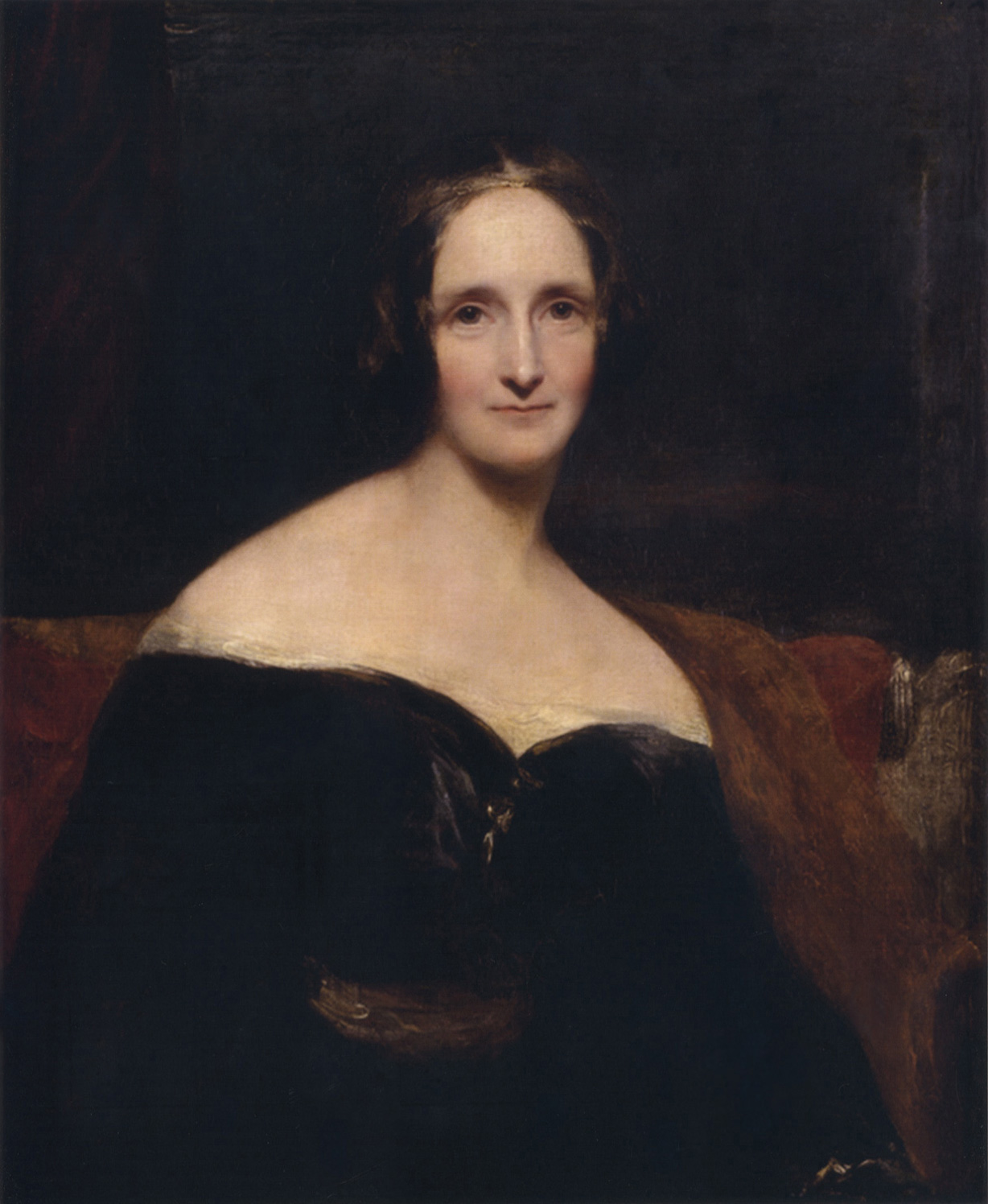
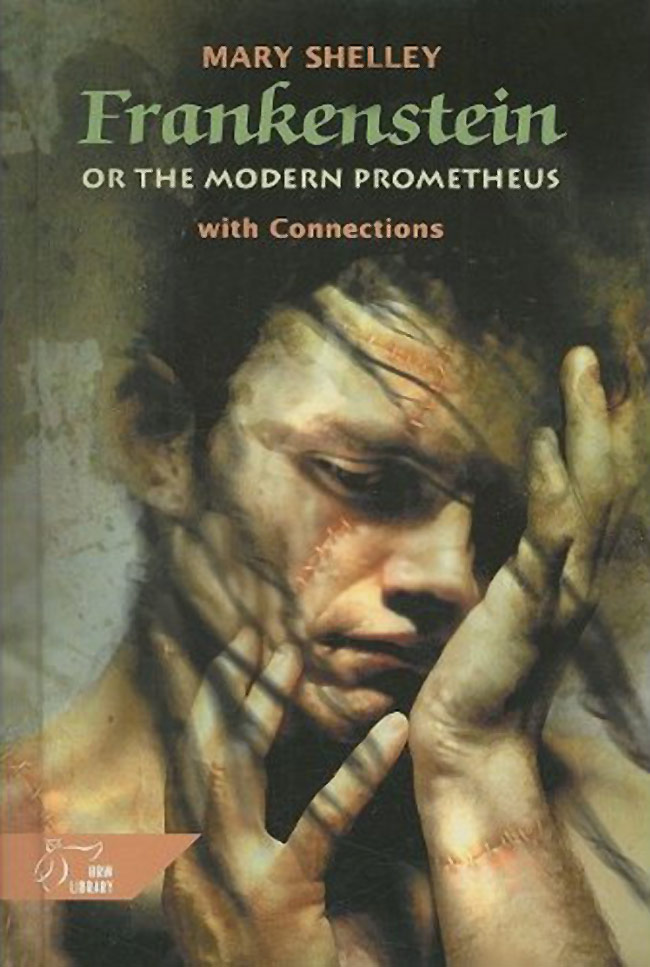
Mary Shelley, author of the Gothic classic Frankenstein and wife of Romantic poet Percy Bysshe Shelley, was born on August 30th in 1797.


Can you think of any notable events in literary history that you'd like to share? Leave a comment below, or join us @GodinePub on Twitter!

Tuesday, August 27, 2013

Scandinavian Winters

By Addie Byrne

Scandinavian winters last at least seven months. I should know, I’ve experienced them firsthand. The first snow drifts down in early November as the temperature drops and the ground becomes hard and frozen. By December, temperatures have fallen well below -20°, and at that point it doesn’t much matter if it’s Celsius or Fahrenheit. Add in a chilling north wind and the cold cuts right to the bone. Snow begins to pile up, first inch-by-inch and then foot-by-foot. Then, for months, the land is buried, alternatingly attacked by blizzards and frost with no end in sight. The people who live there settle in; this land creates those who can withstand. Long after the rest of the world would have resigned themselves to despair, the Scandinavians continue about their daily lives. Sometimes they even dare to have fun outdoors when the wind lets up. People always ask how anyone can live up there. I tell everyone the same thing: there is a quiet beauty where you least expect it.

Hardly anyone ever gets to see the first of the dawn light making a frosted tree glisten in the sun. Few people experience the complete and heavy silence a fresh snowfall brings to a forest. Almost no one stands to admire the stark beauty of a frozen, white, open field for as far as the eye can see. The people that live here reflect their land. They embody this indomitable force that allows them to endure. Most people call them stoic; indifferent to emotion. I call them quiet. Their affects are reduced, in the sense that they display fewer emotions but the emotions are all the more powerful for it.


Stig Dagerman’s collection of short stories, Sleet, embodies the unexpected contrast found so often in the Scandinavian culture. The first story, “To Kill a Child”, is written with an almost extreme emotional detachment that belies that tragic content of the story. Author Graham Green commented, “Dagerman wrote with a beautiful objectivity. Instead of emotive phrases, he uses choice facts, like bricks, to construct an emotion.”  The factual account of the actions leading up to the child’s death in the story contrasts with the building horror that the story, as a whole, evokes. He makes his characters real; they lend credibility to the stories that are more than possible, while at the same time unimaginable. 

Some may call Dagerman’s writing stoic. There is most certainly an indifference to his writing, considering the sensitive content. I would call his writing quietly beautiful. The reduced emotional voice of the narrator summons a stronger emotional response from story. The subtly powerful and harshly beautiful influences of Scandinavian culture reveal themselves in Dagerman’s haunting collection of short stories.

Sleet is now available for sale on our website; you can find more information about the collection here.

Leave comments below or join us on Twitter @GodinePub.


Superior Person's Tuesday!

Funambulist, n. A tightrope walker.


To all the aspiring funambulists out there: don't try this at home.

Each Tuesday, we’ll offer up a Superior Word for the edification of our Superior Readers, via the volumes of the inimitable Peter Bowler. You can purchase all or any of the four Superior Person’s Books of Words from the Godine website. Funambulist appears in the Second.

Monday, August 26, 2013

Harnessing Your Dreams Into Creative Energy: Why It Could Spark Your Writing

By Christina Freitas

Last semester, I enrolled in a one-credit writing practicum at my university entitled Dreams and the Subconscious In Writing. It seemed quirky, a fun way to entertain my writing mind, and it turned out to be a phenomenal course, one I would take again and again if I could. Tapping into my dreams for fuel to drive forward my stories turned out to be a stimulating and rewarding experience. And it springs to mind now as I leaf through the pages of Rainier Marie Rilke’s The Inner Sky: Poems, Notes and Dreams.

This translation features many previously unpublished works in a dual language format: on one side, Rilke’s native German, on the other, beautiful translations from Damion Searls. Juggling reality and the fantasies created not only within our minds, but also within our dreams, these pieces speak volumes about how even the smallest of images can spark intense introspection, unearthing stories still blooming beneath the weight of our everyday reality.

Exploring your dreams, peeling them open like fresh oranges in the morning, is actually incredibly rewarding. People often discount dreams, claiming they hold no resonance, just a jumble of images collected from your subconscious with no real rhyme, reason, or meaning. Some people may not remember their dreams to begin with, so their somewhat empty dream life may seem meaningless from the beginning.

But Rilke’s explorations suggest otherwise. His inspirational words point to truths and meanings that can be gleaned from anyone’s dreams, however minute or ridiculous, if they are so inclined. Even the most incoherent dreams can actually harbor inner clockworks of their own which may rival, or even surpass, the humdrum sensibilities of the everyday.


It may serve as little comfort, but dreams can even help us cope with our fears or lingering traumas. Our subconscious may work diligently through dreams, though they often appear as nightmares, to offer resolution where in our waking lives, we stumble through obstacles again and again. And sometimes, if you dig deep enough, your silliest dreams can even foster a creative firestorm on the page.

Naturally, there's a catch. You have to remember your dreams to draw creative juices from them. It helps to keep a dream journal, for one thing, and to be diligent in writing down your dreams the first time you wake up. Don’t give yourself five extra minutes because those initial images and emotions associated with your dreams will start fading the moment your brain returns from its subconscious wonderland to the tick tock mentality of reality.

Write, draw - record your dreams however you see fit!
And if you have trouble remembering your dreams at all, one tip our professors gave us – and don’t laugh, because it actually does work for some people – is this. Drink a little water before going to bed and say to yourself, I will remember my dreams tonight. Once you wake up in the morning, repeat the same drinking process and begin writing down your dreams. I've tried it, the method works. And I've had incredibly vivid dreams ever since.

So remember, dreams are creative stimulants, and they're yours to play with. You can bend their rules, assert your own, and transform them into something beautiful, dark, fantastical, explorations of your subconscious self. They’re your dreams – bring them to life! Leave us a comment below or join us on Twitter @GodinePub. For more information on The Inner Sky check out our website.

Friday, August 23, 2013

Taking What We Like: The Benefits of Remixing Literature

by David Field

Somehow, I don't think this
is what Jane Austen had in mind.
Why are we so fascinated by adaptations? From Heart of Darkness to Francis Ford Coppola’s Apocalypse Now, from Jane Austen’s romantic classic to Pride and Prejudice and Zombies, writers and artists today seem obsessed with taking old stories and making them new. Modern retellings of myths and fairy tales have been popular for years and show no signs of disappearing anytime soon – just look at shows like Grimm and Once Upon a Time. Classic mythology, too, is still very much alive in our modern culture, and you don’t have to look far to find it. Some titles that spring to mind right away are the new Clash of the Titans remake, the Percy Jackson series for younger readers, and the Coen brothers’ Odyssey-based satire, O Brother, Where Art Thou? The list goes on, and it’s an extensive one. But why is this? Why are today’s creative thinkers so fixated on the stories of the past?

Coppola adapts Heart of
Darkness to the horrors
of the Vietnam War.

There are any number of reasons, but I believe it’s simply because these stories have stood the test of time. They embody universal themes and establish archetypes that never seem to go away, no matter how many years it’s been. For example, Alice in Wonderland gives us a girl struggling to find her way in a world that just doesn’t make sense. The extraordinary voyages of Jules Verne and other science fiction writers give us men who push boundaries and make sacrifices in the never-ending pursuit of knowledge. And we never get tired of the classic hero’s quest, the triumph of the good and righteous over the wicked and corrupt. It’s a plotline that stretches all the way back to mankind’s earliest myths and stories, and it’s still inescapable in today’s pop culture, as seen in massive franchises like Harry Potter and The Hunger Games. In some capacity, all of these classic tales tap into the wishes and worries that are still so prevalent in our world today, which is why so many creative minds turn to them for inspiration.

Linda Bamber’s upcoming collection, Taking What I Like, is chock full of these types of stories. She constructs fresh, original narratives around characters and written works that most readers will recognize right away. The short story “Casting Call,” for instance, features Desdemona and the rest of Othello’s dramatis personae, who have been plucked from the streets of Venice and placed in a university English department. (You can find a free download of the story here!) Bamber’s story is not a Shakespeare imitation, however. She uses a cast of characters that resonates with readers to construct a story with a powerful social message about race and minority empowerment, a message that couldn’t be more relevant in our society today. The familiar faces give us ground to stand on. Bamber’s expert storytelling then lets us stride across that ground and find new paths, new interpretations that go beyond the original text and reveal significant truths we never would have spotted otherwise.

Shakespeare himself was no stranger to adaptations. Many of his plays were based on the lives of real historical figures (Antony and Cleopatra, Julius Caesar, Richard III, etc.) while others were heavily inspired by legends or stories his audiences would be familiar with (King Lear, Othello, Romeo and Juliet, etc.). The bard looked at these classic tales and knew they had more stories to tell, so he created new characters and gave them voices. And as writers like Linda Bamber have proven time and time again, there’s no shortage of stories left in these timeless works of art. Taking What I Like is available starting today; you can find more information about the collection here.

What’s your favorite modern adaptation? How did it stack up to the original? And what new insights do you think the remix brought to its classic predecessor? Share your comments with us here, or join us @GodinePub on Twitter!

Tuesday, August 20, 2013

Superior Person's Tuesday!

Acerebral, adj. Without a brain.


Dorothy makes a new acerebral friend on her journey to the Emerald City.

Each Tuesday, we’ll offer up a Superior Word for the edification of our Superior Readers, via the volumes of the inimitable Peter Bowler. You can purchase all or any of the four Superior Person’s Books of Words from the Godine website. Acerebral appears in the First. 

Monday, August 19, 2013

We Art Boston: Upcoming Fundraiser to Benefit the Boston Children's Hospital

Godine author and illustrator Joe McKendry (Beneath the Streets of Boston, One Times Square) has kindly informed us of a fundraiser that he put together to benefit the Emergency and Trauma Fund at the Boston Children's Hospital.  The 'We Art Boston' auction was created in the wake of the Marathon bombing and features work by some of the best known illustrators working today. 

The more than 40 participating artists of We Art Boston honor the role of story time with a fundraiser featuring original works of art from some of the most beloved contemporary children’s books.  Godine illustrators Barbara McClintock, Glenna Lang, Guy Billout, Jared Williams and Joe McKendry have all generously donated original art to be auctioned off at this event.

Get updates and information leading up to the October 20th event at www.facebook.com/weartboston and at www.weartboston.org.


Tuesday, August 13, 2013

Superior Person's Tuesday!

Mystagogue, n. One who instructs in mystical or arcane lore and doctrines.


A hush fell over the room as the great mystagogue prepared to address his students.

Each Tuesday, we’ll offer up a Superior Word for the edification of our Superior Readers, via the volumes of the inimitable Peter Bowler. You can purchase all or any of the four Superior Person’s Books of Words from the Godine website. Mystagogue appears in the First. 

Monday, August 12, 2013

Books Don't Grow Up: Loving Books with a Child's Heart

By Christina Freitas

In a word, one could pinpoint the most appealing aspect of books everywhere: escape. There is no simpler way to delay an inevitable rendezvous with reality. You need only crack open the spine of a nearby novel, duck your nose against its inked pages and read on, leaving reality waiting by the punch bowl for a few hours more. Books can represent fantastical worlds and excite our imaginations in ways the humdrum of daily life can often deny. This feverish activity can often be found most poignantly in works of children's literature.

Take, for example, our recent republication of The Tyger Voyage by Richard Adams. First published in 1976, this classic tale recounts the exploits of a father and son as they traverse terrains both dangerous and exhilarating, uncovering unique adventures and encountering intriguing characters before they find their way back home. It's an inspiring ride which children (and adults) will love, perhaps due in large part to the ways in which this fantastical tale is both an escape and an appeal to our realities, to grander concepts of family, sense of place, the desire to see the world in its many colors and forms.

Maybe it is this creative mesh of fantasy and reality, often at the heart of so many children's tales, which endears their stories and a sense of adventure in adults as well. Children's literature plants the seeds for future readers to embrace, imagine, to dream bigger and brighter than those who came before. It's an important stepping stone in the hierarchy of reading and while growing up means one's tastes will inevitably change, it doesn't mean one has to read any less with the heart of a child. We can still embrace the fantastical as well as the realistic and find the two shaking hands in some of the most beloved stories.

Just as Adams brings home both an imaginary adventure and the significance of family in this classic title, writers such as J.R.R. Tolkien and J.K. Rowling (to name a few) confront questions about power, love and friendship in the face of epic good-vs-evil struggles whose foundations have a home in our own world, despite the fantastical webs entangling their characters. It may be the stuff of children's books, but when you consider the very nature of the word fiction, there's an inherent level of fantasy in every title we read.

I've always wanted one of these. 
True, many stories are as close to a departure from this magical world as one will likely find in literature. Everyone has read at least one novel whose characters are engaged in the often overwhelming struggle to pierce the veil of our muddled and often inhospitable realities. But at the heart of every novel, every short story, there is a fantasy of some kind – it may be confronted, torn apart, embraced or ignored by the writer, but readers take part in this fantasy of their own volition, from their immersion in these pages to the characters they follow with hushed words and bated breaths.

Naturally, not all tales we read are littered with emblems of the fantasy genre, per se, or the imaginary findings of children's stories. Elves, fairies and happily-ever-afters are often a rarity in much of the prose we read. As we mature, our stories tend to develop longer shadows. Our beloved heroes, whose foes could have easily been slain and killed in our youth, are now forced to contend with villains who haunt them for hundreds of pages, even multiple books, and are far more rooted in reality than any dragon or fictitious knights.

Yet we still read for the same reasons we embarked on youthful adventures through children's books. We read to be inspired and amazed. We read to plunge into the lives of these characters, who become like dear friends by the novel's end, and pray they will rise from the ashes of their own turmoil. We read for the same sense of fantasy provided by tales of old, for the world they bring into our hearts and our minds, for the calm, suspense, anger and joy a writer can produce, with a touch of imagination and the stroke of a pen. It's a timeless passion, reading, and it remains as youthful and exuberant as ever.


Reality beckons and we all have to come home eventually, but why not delay the return, make a few more pit stops, linger just a day more in a forest teeming with words and stories for readers of every kind? If you'd like to weigh in on your obsession with reading, feel free to comment below or join us on Twitter @GodinePub. For more information about The Tyger Voyage please visit our website.

Wednesday, August 7, 2013

From Page To Screen: Why It Pays To Give Film Adaptations A Chance


By Christina Freitas

Everyone says it, and it's usually (scratch that - always) true - the book is better than the movie. To be fair, there are nuances of both film and literature that cannot be replicated onto the face of the other. Much can be gained, and therefore lost, in cinematic translations from page to screen. Despite how we lament time and again those classic novels that were turned into average, maybe even awful films, we continually yearn for our favorite novels to become films, or even a television series. More and more we become enamored with the intricacies these novels display onscreen, rather than minor details left out in the interest of time and money.

Which got me thinking - maybe we're too hard on those individuals who adapt books for the cinema. After all, screenwriting and novel writing each have their own strengths, and writers can often find success in both genres. 

Here at Godine, two authors come to mind. One is Daniel Fuchs (author of The Golden West and The Brooklyn Novels), who is an accomplished screenwriter and won an Academy Award for his screenplay for the 1955 film Love Me Or Leave Me. There’s also Noel Langley, author of The Land of Green Ginger, who produced the screenplay for a film we should all know - The Wizard of Oz in 1939.

Their publications cross entirely separate genres, from introspective looks at the Hollywood machine in an autobiographical light, to an exploration of enticing worlds born of a writer’s imagination. As screenwriters, their vision of the storytelling world bears a unique tint. Their perspective of characters, narrative form, and scenery will often hearken back to their roots in cinema, though these are roots that also simmer in the world of the novel. As difficult as it is to reproduce a novel on film without losing some of its magic, whether challenges rest with casting calls or re-imagined scenes, we should not ignore the shared imaginary tracts of these two fields.

These two screenwriters successfully bridged the worlds of cinema and the printed page, and when a screenplay remains faithful, chances are a film will triumph in the minds of its avid followers, if not at the box office. When I think about successful film adaptations, a few examples always spring to mind: The Lord of the Rings franchise, To Kill A Mockingbird, The Godfather, and more recently, The Silver Linings Playbook. Behind each production is a faithful screenwriter and a crew devoted to capturing the essence of these stories, in the words of their creators.


When film adaptations succeed, the effects are tremendous. Your beloved characters stand personified, often exactly as you imagined them, and there's something oddly satisfying about chronicling their journeys on a screen that isn't isolated in your mind. You bear witness to their victories; experiencing every emotional lasso that cinema can rope around your arms. You want to be moved and cinema, like novels, is a wondrous mode of transportation.

So when your favorite novel trickles into Hollywood’s heart, don’t despair: give it a chance! Do you have any particular favorites film adaptations, or think any Godine books would make a great movie? Leave comments below or join us on Twitter @GodinePub. For more information on The Golden West, The Brooklyn Novels or The Land of Green Ginger, please visit our website.   

Tuesday, August 6, 2013

Superior Person's Tuesday!

Camilles and Dying swans, n. Medical terms for patients who loudly proclaim the imminence of their death when in fact their condition is not noticeably terminal.


"My toes are killing me!" complained the dying swan.

Each Tuesday, we’ll offer up a Superior Word for the edification of our Superior Readers, via the volumes of the inimitable Peter Bowler. You can purchase all or any of the four Superior Person’s Books of Words from the Godine website. Camilles and Dying swans appear in the Superior Person's Field Guide.

Tuesday, July 30, 2013

Superior Person's Tuesday!

Flubdub, n. A glorious nineteenth-century word meaning "bombastic language." Use it together with "flimflam" (humbug, idle talk).


The conversation quickly devolved into flubdub and other pretentious nonsense.

Each Tuesday, we’ll offer up a Superior Word for the edification of our Superior Readers, via the volumes of the inimitable Peter Bowler. You can purchase all or any of the four Superior Person’s Books of Words from the Godine website. Flubdub appears in the Second.

Wednesday, July 24, 2013

A Little Bit Country, A Little Bit Shakespeare: The Marriage of Music and Writing

By Christina Freitas

Henry Wadsworth Longfellow once said, “Music is the universal language of mankind.” A pretty hefty statement, I think, for a man engaged in the art of making his words serve the same purpose. Yet there’s an intrinsic truth to his words, one that has been noted by countless artists, a creative mesh of two extraordinarily similar artistic spheres. Not all music has lyrics, but all language has a rhythm, a beat, a musical quality of its own. It’s a match made in heaven. Or more accurately, a match made in imaginative minds.


"I was raised on rock."
- The Scorpions
Inspiration doesn’t just evolve from one mode of thinking; it trickles from several tributaries, integrating its influence in countless ways, through art, literature, history, science. From worlds so closely intertwined, an author can garner as much meaning from a three-minute song as a country singer can wrangle from the depths of a twenty-line poem. This symbiosis is evident in  It’s Only Rock and Roll: An Anthology of Rock and Roll Stories by Janice Eidus and John Kastan. This title combines the legacy of rock and roll, the pulsing power of its music, and echoes these feelings through language, built on characters and conflicts, rather than melodious, sometimes jarring, chords splayed across bars and time signatures.

There’s a lot to love in music and literature, and I’m not shy in admitting that I've always felt music lends itself to writing. Not just lyrics, which can serve as stories all their own, but also the very feel of the beat drumming inside our heads, stirring up all sorts of chaotic creativity until we cannot help but let it explode, let it fall on the page.

I don't make Vulcan symbols
while I'm writing. I promise.

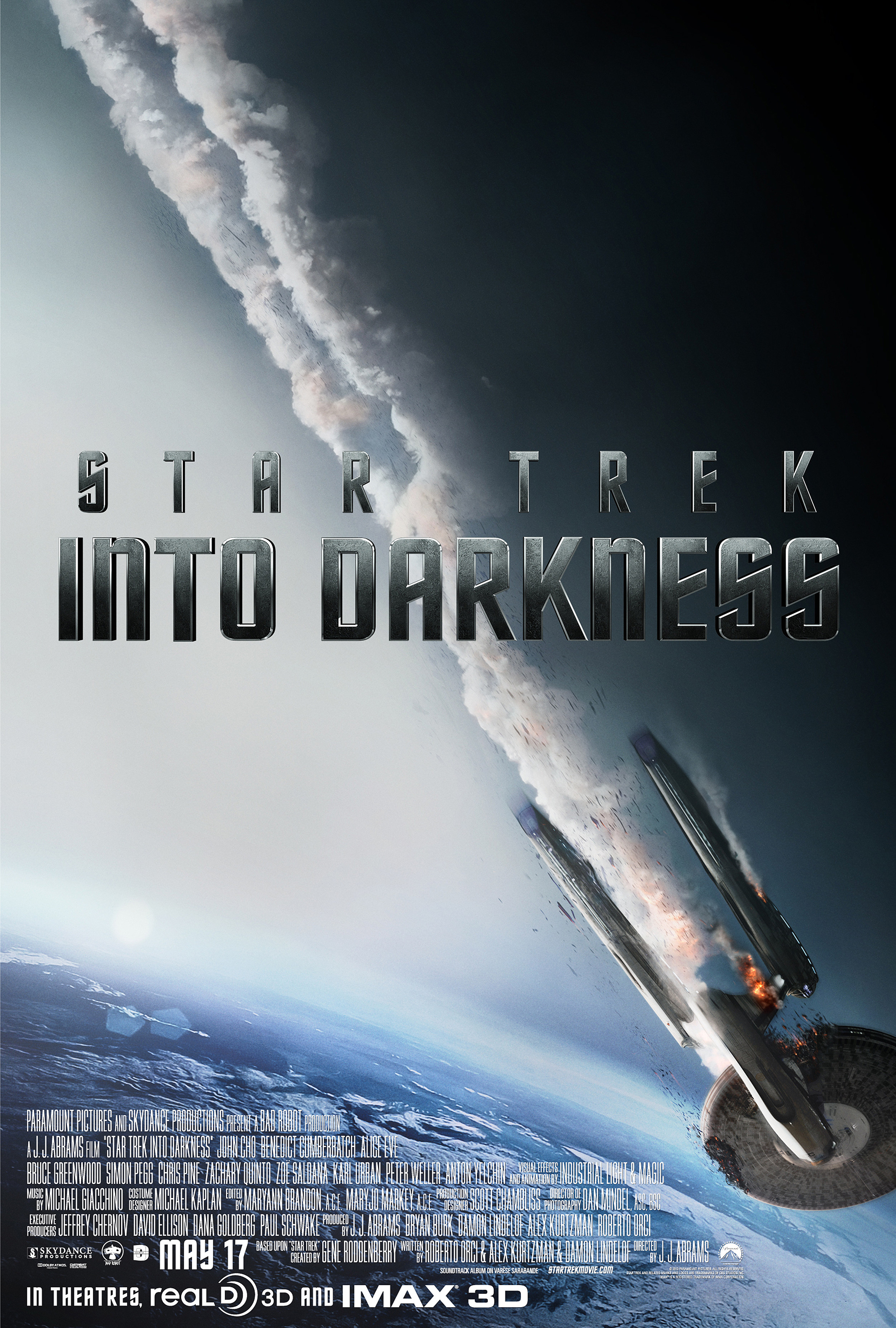
When I write, I prefer to do so under the backdrop of some melody, one that reflects the mood I’m searching for, the scene I’ve crafted. My heart beats for rock and roll, the fevered thump of the drum, the rasp and wail of the guitar, the continuous energy emanating from every chorus, every chord. Of course, that doesn’t mean I completely ignore other musical styles. You’re actually more likely to find me typing away to an orchestral soundtrack than anything else! Which is a little odd, considering my most recent soundtrack obsession is that of Star Trek Into Darkness, and I don't quite write science fiction.

Still, I like to profile my characters in song, create a soundtrack that reflects on their lives, their personalities and their tastes. Dig around inside their head. Map out a story of their life, but in music. In many ways, I feel music can do that – tell the story of a man, or a woman, in just a few minutes, little snapshots, novellas from the pen of a musical writer. It’s no wonder that authors and artists have found common ground over the years.

Of course, music and writing are not entirely the same. There are intricacies inherent to music that cannot be duplicated on the page, just as there are limits to how much a story can translate into three or four musical minutes. One can never replace the other and for all their similarities, we would suffer as much in a world without music as we would suffer in a world without books. Luckily, we can have both, and still admire the thin trails connecting so many artistic expressions across the years, just as Eidus and Kastan have done in their brilliant anthology of a musical era that just keeps on rolling.


Do you have any thoughts on the wonderful collaboration of music and books? Are there any particular songs, or a specific genre of music, that have ever inspired you to write, or served as a suitable soundtrack to a book you’re reading? Share your comments with us here or join us on Twitter @GodinePub. For more information about It’s Only Rock and Roll, please be sure to visit our website!

Tuesday, July 23, 2013

Superior Person's Tuesday!

Pandiculation n. Stretching and yawning.

After a rough day at the zoo, this little guy was due for some pandiculation.

Each Tuesday, we’ll offer up a Superior Word for the edification of our Superior Readers, via the volumes of the inimitable Peter Bowler. You can purchase all or any of the four Superior Person’s Books of Words from the Godine website. Pandiculation appears in the First.

Wednesday, July 17, 2013

A Trip Down the Rabbit Hole: The Edinburgh International Book Festival Kicks Off

By Christina Freitas

On August 10th, Edinburgh will erupt in literary fever, ushering in a tradition now thirty years strong. Tourists will flock to this scenic destination for a chance to meet and discuss the future of books, literature, and the craft of writing with world-renowned authors and future rising stars. And it’s all part of the much larger Edinburgh Fringe Festival, an annual celebration of the arts in all its forms, complete with over 2,500 performances and events for its visitors to enjoy.

Thirty years, and still going strong!

Founded in 1983, the Edinburgh International Book Festival remains one of the world’s largest literary celebrations. Extending over the course of two weeks, from August 10th through the 26th, the Festival welcomes tourists, readers and writers from all corners of the globe to a rousing collection of book-related events. This year, the Festival will mark thirty years of extraordinary history not just in the realms of art and literature, but in politics and science as well, particularly for Scotland. Visitors are privy to stirring talks about what the past can teach us today, and how our future may in turn be shaped by it.

There will be reading workshops, where authors join fellow readers to critically discuss some of their favorite reads. Alan Durant (Blood, Publish or Die) will host one such talk on August 10th, to discuss the lasting legacy and message of The Catcher in the Rye by J.D. Salinger. Events will touch not just the palms of several literary genres, but also other artistic realms such as music, in events uncovering the inspiration many famous authors, and their works, have gained from the world of music.

And of course, there will be guest speakers. Some of the most notable authors present at the 2013 Festival are Margaret Atwood (The Blind Assassin, The Handmaid’s Tale) and Neil Gaiman (Neverwhere, American Gods). If you’re feeling a little faint at the thought of hearing one of these authors speak, you may want to find a seat. Fast. On the final day of the festival, these legendary authors will share the same stage and engage in a joint conversation about their works, their inspirations and the world of writing.


It’s a relatively young tradition, but it’s one that the world sorely needs. We cannot afford to forget the significance that every book presents to our world, the way we view it, how we shape it. Books have eyes and ears, molded by those who revived the inky hearts at their cores. They see the world, they extract pieces of the puzzle and they create a mosaic of thoughts, ideas, and images, to help unravel life’s greatest puzzles, the ones that face us all. They touch us, often in ways we don’t realize.

And for that we should thank the writers who brought them to us and offer a standing ovation to the writers who will rise today and tomorrow, to carry on the marvelous tradition of storytelling, for our world and the one that will follow. Ten years from now, I hope the Festival will be celebrating its fortieth anniversary, celebrating even more authors, the ones who stunned us and impressed us, continuing the tradition of honoring their works, and welcoming with open arms the next generation of great writers for years to come.

Has anyone ever attended the Edinburgh Festival, or know anyone who has? You can share your thoughts or stories in the comment section below, or join us on Twitter @GodinePub. For more information about the Edinburgh Fringe Festival, please visit their website. And for extended coverage of the Edinburgh International Books Festival, feel free to peruse its homepage.

Tuesday, July 16, 2013

Superior Person's Tuesday!

Noctivagant adj. Wandering by night.

After moving to the city, Janet developed some noctivagant behavior.

Each Tuesday, we’ll offer up a Superior Word for the edification of our Superior Readers, via the volumes of the inimitable Peter Bowler. You can purchase all or any of the four Superior Person’s Books of Words from the Godine website. Noctivagant appears in the Second.

Monday, July 15, 2013

Movie Magic: Filming at David's House!

Crew members film The Judge in David's driveway.
Image credit: Bella English/Globe Staff

With yesterday's article in the Boston Globe, it appears the cat is out of the bag: for the past few weeks, David's home in Milton has been one of the filming locations for The Judge, a new movie starring Robert Downey, Jr., and Robert Duvall (among others)! That's right – the house that Robert Duvall's character lives in in the movie is in fact David Godine's house in real life.

"How did this happen?!" you might ask. Essentially, people connected to the film were scouting locations around Massachusetts and happened to come across David's house. They liked it, so they asked if they could use it in a movie – it didn't take a whole lot of convincing for David and his wife Sara to say yes.

The movie will be released in 2014, and the synopsis, according to the Internet Movie Database, is:
A successful lawyer [Downey, Jr.] returns to his hometown for his mother's funeral only to discover that his estranged father [Robert Duvall], the town's judge, is suspected of murder.
I got to visit the set myself, and witness firsthand the craziness that comes along with filming at a residential location. The morning I was there, they spent hours filming a single scene that will probably only be about 30 seconds long in the final movie (assuming it is not cut). They made sure to film every angle imaginable - a close up on Robert Downey, Jr., focused on him but from a little further away, over his shoulder looking at his neighbor, a close up of the neighbor, etc. (I can't give away details about the scene, though, sorry!) They ran each shot at least 3 to 4 times, and RDJ seemed to be improvising variations of his lines in a few of the takes.

L to R: Stunt coordinator Keith Campbell, David, and David's wife, Sara Eisenman
Image credit: Bella English/Globe Staff
At one point during the morning, David and I were in his kitchen when one of the movie's Production Assistants came in to see if David would let them use some of his mugs – apparently the ones they had planned to use were no longer making the cut. The PA looked through David's cabinets and picked out a few options. She remarked that she couldn't use most of the mugs because they had logos or images on them that they would have to receive permission to use and David steered her toward a mug with the David R. Godine, Publisher name and logo on it. "I'm in charge of permissions," I told her, "and I can officially grant permission for you to use the mug with our logo." She laughed, but she took it as one of three options – "we'll see which one Robert Downey, Jr., picks" – and that was that. Rumor has it that RDJ actually did pick the Godine mug, so keep your eyes peeled when you see The Judge in theaters next year!

If you missed the article in yesterday's Globe, you can read it online here.

Wednesday, July 10, 2013

June News and Review Round Up

Here at David R. Godine, Publisher, we strive to produce high quality books above all else. So, when our books and authors are praised, we hope you'll forgive us for acting like proud parents. Please join us in celebrating the recent success of a few of our talented authors.

In recent news, Joe McKendry attended Winchester Town Day in Winchester, Massachusetts on June 1st to promote One Times Square and Beneath the Streets of Boston. He can be seen below holding Beneath the Streets of Boston and standing with fellow author Neal Sanders. A fun time was had by all, and we at the office sure wish we could have been there! You can get your own copy of McKendry's Beneath the Streets of Boston from our website.

Joe McKendry (left) and Neal Sanders

We love to see our wonderful authors and translators getting the recognition that they deserve. Library Journal praised and recommended J. M. G. Le Clézio's The African, specifically highlighting C. Dickson's skillful translation:
Le Clézio, recipient of the 2008 Nobel Prize in Literature, recalls the emotive and evocative African experience of his youth. . . In the process of writing this reminiscence and selecting some of his father's photos to accompany the text, Le Clézio comes to cherish a life subsumed by Africa. None of the photos include his father, and the book never mentions the man's name. VERDICT This is a fluid translation from the French version published in 2004 and a fine introduction to a prolific and relatively unrecognized writer. Recommended. —Lonnie Weatherby, McGill Univ. Lib., Montreal
The Complete Review shared Library Journal's positive impression of The African:
These are quite fascinating lives, though what Le Clézio offers are largely only glimpses and general outlines. . . Still, it makes for an appealing little memoir, of distant fathers and their sons; a sliver, only, of these lives, but thoughtfully presented. —M. A. Orthofer
Read the full review here. The African is available for purchase on our website.

We just became aware that Boston.com's Pet Chatter blog mentioned our much-beloved Catie Copley books Catie Copley and Catie Copley's Great Escape back in May. Blogger Stephanie St. Martin writes:

Fairmont Copley Plaza welcomes pets of all sizes, but you don't have to bring your own to receive some cold nose therapy. Bellico shares his favorite part. "The hotel has a resident 'canine ambassador' in Catie Copley, a gorgeous (and incredibly gentle) black Labrador retriever," he says. "Originally trained as a guide dog, Catie occupies a dog house at the hotel's main entrance and can be reserved for walks or runs throughout the city. Catie has become something of a celebrity, with a pair of charming children's books written in her honor." But don't worry, sweet Catie hasn't let it go to her head. She still greets guests with the enthusiasm of a puppy!
The real-life Catie Copley
You can find the full post on pet-friendly Boston hotels here, and check out our Catie Copley books (if you haven't already!) here.

Kate Barnes
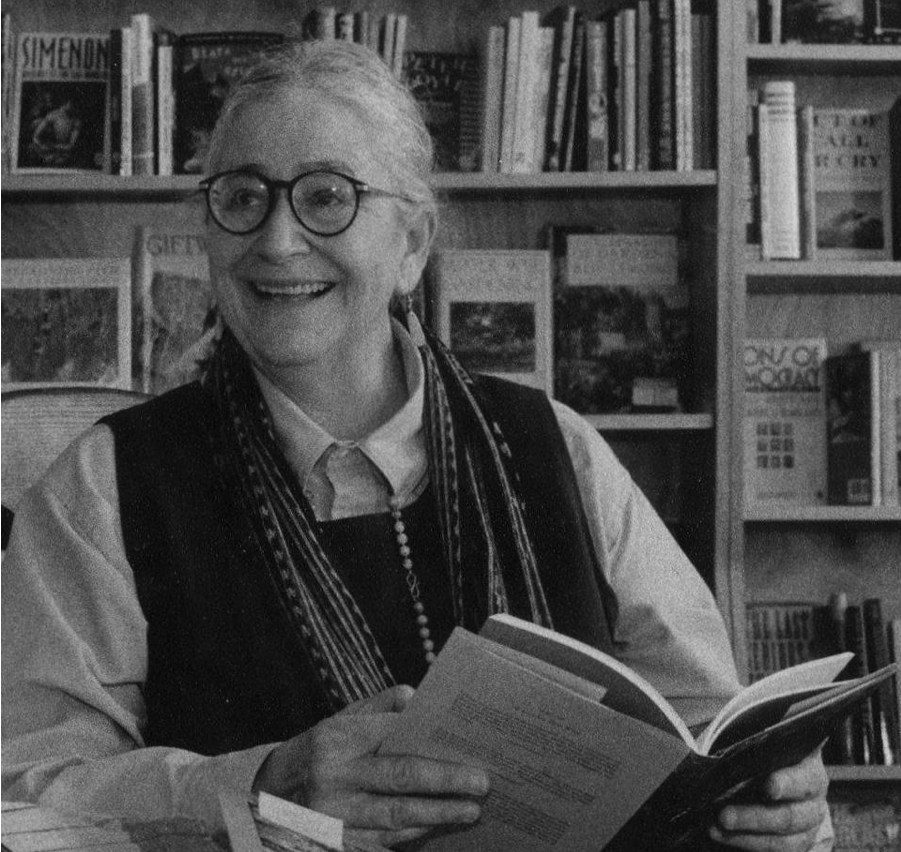
On a sadder note, The Boston Globe celebrated the life and work of the late Kate Barnes, author of Where the Deer Were and Kneeling Orion. Read the article here. She was a woman of many talents, and she will be sorely missed.

Don't forget to visit our homepage for more information on upcoming and recent titles!