 | |
|

Tuesday, February 26, 2013
Superior Person's Tuesday!
Defenestration, n. The act of throwing someone or something out of a window. A word that is neologism's paradigm and justification. If the word were not needed to describe the act, the act would need to be performed to justify the word.
Each Tuesday, we’ll offer up a Superior Word for the edification of our Superior Readers, via the volumes of the inimitable Peter Bowler. You can purchase all or any of the four Superior Person’s Books of Words from the Godine website. Defenestration appears in the First.


Monday, February 25, 2013
The Beauty of Black Sparrow Books
Not to mention the original use of type, color, ornament, and paper and the relationship between these elements that put this particular press – now an imprint of David R. Godine, Publisher – in a league of its own. In his essay, Kelly describes how he views a book as something precious, an object “of love and desire by virtue of some gorgeous timeliness conferred by printer or binder," and how Black Sparrow books confer such a quality. The woman behind many Black Sparrow covers is Barbara Martin, who designed over three hundred in twenty years from her Santa Barbara home. Martin, who is married to John Martin, the original publisher of Black Sparrow Press, accurately portrayed each individual work and author while still preserving an identifiable style of her own. She viewed assignments critically and would refuse an author's personal color preferences if they did not serve the work. Kelly could always recognize a Black Sparrow book in a store, drawn to it by the "tender differences the designer cares for" that characterize Martin's look.
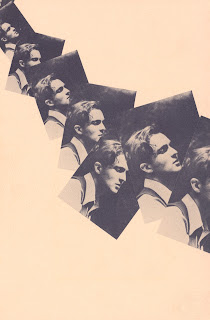
Martin's covers are indeed striking. Her sharp, geometric compositions betray influences of abstract expressionism and Russian modernism and push the reader to question their relation to the content inside. With one of these books in hand, it is impossible not to notice the fine quality of the paper on which the covers are printed and the bold colors rendered in clean, decisive matte. Open one up and you will see a three-color title page, a rarity in today's printing world.
The “continued miracle of the Black Sparrow Press” Kelly writes about is just as evident today as it was decades ago. Here are some examples of Barbara Martin's covers (front and back) from our shelves, all of which are still available on Black Sparrow's website:



John Sanford, Scenes from the Life of an American Jew, Volume 1: The Color of the Air


Thaisa Frank, Sleeping in Velvet
If you're still feeling nostalgic for the crisp letterpress style of the past, take a look through the many other treasures that Black Sparrow has to offer here.
Thursday, February 21, 2013
Nan Parson Rossiter: Remembering the Outermost House
 |
| The Outermost House as it was swept to sea. |
Thirty-five years ago this month, Henry Beston’s beloved Fo’c’sle — better known as the Outermost House — was swept away by a raging North Atlantic Ocean. Although the sturdy little house — built in 1926 — had been moved inland twice for protection, there was no protecting it from the ferocious winter hurricane of 1978 which buried New England in several feet of snow, ravaged the beaches of Cape Cod, and swept away the historic little literary landmark.
The Outermost House was built on a dune above Nauset Marsh by naturalist and writer, Henry Beston, who lived on the edge of the thundering ocean for a year and chronicled his experience in an enduring book of the same name. Henry’s eloquent passages about the changing seasons on the outer banks of Cape Cod helped influence the decision to declare the rugged forty mile stretch of coast from Provincetown to Chatham as the National Seashore, but one passage in particular reveals the timelessness of winter’s wrath and the durability of the tiny shelter:
For a mile or so offshore the North Atlantic was a convulsion of elemental fury whipped up by the sleety wind, the great parallels of the breakers tumbling all together and mingling in one seething and immense confusion, the sound of this mile of surf being an endless booming roar, a seethe, and a dread grinding, all intertwined with the high scream of the wind. The rush of the inmost breakers up the beach was a thing of violence and blind will. . . All afternoon long the surf had thundered high upon the beach, the ebb tide backed up against the wind. The great rhythm of its waters now at one with the rhythm of the wind, the ocean rose out of the night to attack the ancient rivalry of earth, hurling breaker after breaker against the long bulwark of the sands. The Fo’c’sle, being low and strongly built, stood solid as a rock, but its walls thrummed in the gale. I could feel the vibration in the bricks of the chimney, and the dune beneath the house trembled incessantly with the onslaught of the surf.
As evidenced by Henry’s writing, the Outermost House endured more than one fierce winter hurricane, but the Blizzard of ‘78 was its last. Earlier this month — almost to the day — New England weathered another harsh winter storm. It crippled the region, closed state roads, and once again, ravaged the vulnerable beaches of Cape Cod. New Englanders shoveled and plowed, endured long power outages, and those who are old enough recalled the blizzard of ‘78 . . . and the enduring legacy of Henry Beston’s beloved Outermost House.
In The Fo'c'sle: Henry Beston's "Outermost House", Nan Parson Rossiter tells the story of Beston's beloved beachside house in both words and beautiful, rich paintings. You can purchase a copy on our website.
Tuesday, February 19, 2013
Superior Person's Tuesday!
Butyraceous, a. Looking or acting like butter; buttery. “Who was that oily young man who took Sabrina out last week? The one who complimented you on your hairdo?” “Oh, the butyraceous one! That was…”
Each
Tuesday, we’ll offer up a Superior Word for the edification of
our Superior Readers, via the volumes of the inimitable Peter
Bowler. You can purchase all or any of the four Superior Person’s Books of Words from the Godine website. Butyraceous appears in the Third.
 |
| These days canines have been embracing the latest butyraceous fashion trends. |
Friday, February 15, 2013
Paul Goodman: Literary Icon
Paul Goodman (1911–1972) defined himself not just as an author but also as a playwright, poet, novelist, urban planner, media critic, classicist, activist, and primary-education expert. An icon of 1960s counterculture, Goodman spoke for a generation of dissatisfied youth through his writing. He was revered not only by students but also by other renowned writers; Susan Sontag called him "our Sartre." Goodman may not be a household name today as he was half a century ago, but his praises are still sung by artists and writers who remember his legendary influence.
Black Sparrow Books, an imprint of David R. Godine, Publisher, publishes many works by Paul Goodman: Volumes 2, 3, and 4 of The Collected Stories of Paul Goodman, Parents' Day, and The Empire City. Find them here, and read a few examples below of recent recognition.
 In an interview this month with writer Jonathan Cott on Powell's Book's Blog, Cott cites Paul Goodman as the one author that he thinks people should read:
Cott also converses at length about Goodman with Susan Sontag in his upcoming book The Complete Rolling Stone Interview with Susan Sontag, which will be published by Yale University Press this fall. In particular, their conversation focuses on the "Johnson Stories," several volumes of which are published by Black Sparrow Books.
The film Paul Goodman Changed My Life (2011) by Jonathan Lee delves even further into the writer's lasting influence, set in New York when the '60s were in full swing. The film features commentary and quotes from a range of writers, peers, and family members. The film's website states:
The New York Times review of the film claims that:
Black Sparrow Books, an imprint of David R. Godine, Publisher, publishes many works by Paul Goodman: Volumes 2, 3, and 4 of The Collected Stories of Paul Goodman, Parents' Day, and The Empire City. Find them here, and read a few examples below of recent recognition.
 In an interview this month with writer Jonathan Cott on Powell's Book's Blog, Cott cites Paul Goodman as the one author that he thinks people should read:
Paul Goodman (1911–1972) was an extraordinary American novelist, poet, playwright, literary critic, psychotherapist, pacifist, and social activist. All of these facets of his being are in evidence in his prodigiously inventive and audacious novel about New York City entitled The Empire City, which depicts a small group of radically sane "misfits" living in a world of eight million "normal" lunatics.You can read the full interview here.
Cott also converses at length about Goodman with Susan Sontag in his upcoming book The Complete Rolling Stone Interview with Susan Sontag, which will be published by Yale University Press this fall. In particular, their conversation focuses on the "Johnson Stories," several volumes of which are published by Black Sparrow Books.
The film Paul Goodman Changed My Life (2011) by Jonathan Lee delves even further into the writer's lasting influence, set in New York when the '60s were in full swing. The film features commentary and quotes from a range of writers, peers, and family members. The film's website states:
Paul Goodman was once so ubiquitous in the American zeitgeist that he merited a “cameo” in Woody Allenʼs Annie Hall. Author of legendary bestseller Growing Up Absurd (1960), Goodman was also a poet, 1940s out queer (and family man), pacifist, visionary, co-founder of Gestalt therapy—and a moral compass for many in the burgeoning counterculture of the ‘60s.

The New York Times review of the film claims that:
The time is surely right for a Goodman revival. There are aspects of contemporary life that he anticipated and influenced — the gay rights movement, most notably — and others that are sorely in need of his wisdom.You can revive Goodman's wisdom and relive his stories yourself by purchasing any number of the volumes offered on our website!
Wednesday, February 13, 2013
Superior Person's Word of the Week!
Aichmophobia, n. Extreme fear of the sight of any sharp-pointed instrument, whether a needle, a nail, a thorn, a spike, etc. James I of England suffered from this phobia, and could not endure the appearance of a drawn sword.
Each
Tuesday (...or the occasional Wednesday), we’ll offer up a Superior Word for the edification of
our Superior Readers, via the volumes of the inimitable Peter
Bowler. You can purchase all or any of the four Superior Person’s Books of Words from the Godine website. Aichmophobia appears in the Third.
 |
| The Beast must have quite a severe case of aichmophobia, Belle thought. |
Friday, February 8, 2013
A "Handy Tip" for the Approaching Storm
 |
| Today’s handy tip comes from The American Boy’s Handy Book, Chapter 27 |
By now you've probably heard about a little storm that is quickly approaching, potentially dropping two feet (or more!) of snow across the Northeast. Many of us will be stuck at homes for the next 36 hours – what can you do to pass the time?
If you have kids (or just a strong connection to your inner child), they'll probably be itching to get outdoors and start creating anything they can out of snow. What could be more fun than building a snow fort? In a snow fort, you can rule over your snow kingdom or strategize for your next snowball fight. The American Boy's Handy Book has us covered for winter fun, including this handy tip for the perfected creation of a snow fort. With the impending blizzard approaching the Northeast, it seems like the perfect time for this handy tip! (Disclaimer: we recommend waiting until after the white-out conditions have passed before venturing outside. Stay safe!)
If you have kids (or just a strong connection to your inner child), they'll probably be itching to get outdoors and start creating anything they can out of snow. What could be more fun than building a snow fort? In a snow fort, you can rule over your snow kingdom or strategize for your next snowball fight. The American Boy's Handy Book has us covered for winter fun, including this handy tip for the perfected creation of a snow fort. With the impending blizzard approaching the Northeast, it seems like the perfect time for this handy tip! (Disclaimer: we recommend waiting until after the white-out conditions have passed before venturing outside. Stay safe!)
The proper building of a snow fort:
- For a
group of ten boys, it is recommended that a square fort foundation be
determined with sides of 10 feet. Trace lines in the snow to create the
foundation.
- Tip:
“Care must be taken to have
the corners of the square opposite the most probable approach of the
enemy. This will leave the smallest point possible exposed to the attack.”
- Start
rolling large snowballs: “as large and dense as possible.” Roll the giant snowballs into place on the
traced lines.
- After
all four sides have been covered with large snowballs; the company of boys
may pack the crevices and holes with snow until the walls have been
filled.
- Using
spades and shovels; the next step requires the walls to be flattened and
trimmed out into perpendicular shapes on each side, in order to give the
fort the appearance of the base of a pyramid. For example: “the top of
the wall may be two feet broad and the base four feet.”
- To
complete the snow fort, a mound of snow should be made in the very centre
of the fort to support the flagstaff.
 |
| A young female snowball warrior has created a weak point in her fort where enemy snowballs may enter, but demonstrated her skills in packing crevices quite nicely. |
The American Boy's Handy Book was first published in 1882, and was written by one of the founders of the Boy Scouts of America. It's a beloved, vintage Americana guide book, filled with activities that are guaranteed to keep kids busy and entertained. You
can purchase it on the Godine website.
Wednesday, February 6, 2013
Barbara Paul Robinson at the Massachusetts Horticultural Society
Last Thursday, January 31st, Barbara Paul Robinson spoke at the Massachusetts Horticultural Society about her book, Rosemary Verey: The Life & Lessons of a Legendary Gardener. It was a great lecture, and a few Godine representatives were able to make the trip – including our friend Mops! Here are some pictures from the event:
 |
| L to R, clockwise: David Godine, his wife Sara Eisenman, Barbara Paul Robinson, and Mops. |
 |
| L to R: Charlie Robinson, Barbara's husband; Barbara; Sue Ramin, Godine's Publicity Manager; and David. |
Tuesday, February 5, 2013
Superior Person's Tuesday!
Acroama, n. A dramatic recitation during a meal; a lecture to the initiated. “Mother, I have agreed to sit down at the dinner table and not to eat my food with my fingers. Is that not enough? Must I submit to acroama as well?”
Each
Tuesday, we’ll offer up a Superior Word for the edification of
our Superior Readers, via the volumes of the inimitable Peter
Bowler. You can purchase all or any of the four Superior Person’s Books of Words from the Godine website. Acroama appears in the Third.
 |
| In some more boisterous families, delivering an acroama may prove an impossible task. |
Monday, February 4, 2013
January Review Round-Up
Here at David R. Godine, Publisher, we strive to produce high quality
books above all else. So, when our books and authors are praised, we
hope you'll forgive us for acting like proud parents. Please join us in
celebrating the recent success of a few of our talented authors.
Publisher's Weekly notes the grace of Adam Van Doren's book An Artist in Venice in the following review:

An Artist in Venice is also praised in the Litchfield County Times, which elaborates on the continuation of the Van Doren literary dynasty and the different aspects of memoir, history and illustration that come together to make the book unique:
Henry Beston's yearlong experience in a Cape Cod cottage in The Fo'c'sle: Henry Beston's "Outermost House" was reviewed in Audobon Magazine:
This book is available for purchase on our website.
New Hampshire Magazine's profile on Donald Hall, the author of The Man Who Lived Alone and String Too Short To Be Saved, looks back on the inspiration of Hall's New England upbringing and his current writing process:


 This week in Martha Stewart Living, Barbara Paul Robinson's Rosemary Verey: The Life & Lessons of a Legendary Gardener is featured among "books to inspire":
Finally, Elizabeth Barlow Roger's own book on gardening, Writing the Garden: A Literary Conversation Across Two Centuries, was named a CHOICE Outstanding Academic Title (OAT) for 2012 in ALA CHOICE magazine's January 2013 issue (for which there is not yet a link online). In their review from last February, CHOICE writes:
Publisher's Weekly notes the grace of Adam Van Doren's book An Artist in Venice in the following review:
Architect and artist Van Doren offers a love letter to Venice in this elegant and slender volume, and he sings his praise to the city through majestic prose and 23 beautiful watercolor paintings of Venice. He quickly discovers, after wandering into San Giacomo di Rialto, perhaps Venice’s oldest church, that the city has one "great transformative advantage: Mediterranean light," which offers a new way of seeing the city’s architecture, the history of art, and his own painting.Read the full PW review here.
An Artist in Venice is also praised in the Litchfield County Times, which elaborates on the continuation of the Van Doren literary dynasty and the different aspects of memoir, history and illustration that come together to make the book unique:
That design concept was enhanced by his publisher, David R. Godine. “He added a nice touch by having sketches of mine on the end papers. It makes it seem you are entering into a personal journal,” the author said. “He is an independent publisher and he is so absolutely devoted and passionate about books. This book is done with touches like that.” Characteristic of the care taken in producing this finely-crafted book is the work of Jerry Kelly, one of this country’s premier book designers. . . The end result is a lovely little book that feels right in the hand. The examples of his art reproduced in its pages capture the light and atmosphere of the city while his prose brings to life aspects of Venice that most visitors would miss.Continue reading the article here, and buy a copy on our website!
Henry Beston's yearlong experience in a Cape Cod cottage in The Fo'c'sle: Henry Beston's "Outermost House" was reviewed in Audobon Magazine:

. . . a beautiful interpretation of his experience on the cape. Nan Parson Rossiter's prose-sprinkled with snippets of Beston's own writing is poetic. . . The book's oil illustrations reflect a contemplative mood as warmer days give way to cooler ones.
This book is available for purchase on our website.
New Hampshire Magazine's profile on Donald Hall, the author of The Man Who Lived Alone and String Too Short To Be Saved, looks back on the inspiration of Hall's New England upbringing and his current writing process:
Early on, he developed a voice as a writer that sounded like no one else's, but his mature prose, as he sees it, was "too bejeweled." Now, embracing the slower pace of old age, he approaches his essays in memoir as he did his poems, writing dozens of drafts.Read more on the past poet laureate here; you can purchase Hall's works online.
Take a look at the recent New York Times review of Stuart M. Frank's Ingenious Contrivances, Curiously Carved: Scrimshaw in the New Bedford Whaling Museum, detailing Frank's elegant collection of whale teeth and bones carved by 19th century sailors:
Read the full article here, and take a look at the book on our website to purchase it!About half the book covers engravings on teeth; sailors illustrated creamy spikes with ships, flags, Polynesian dancers, Austro-Hungarian minstrels and dentists. The men made handles for their carving knives out of whalebone, too, and brought home scrimshaw sewing baskets and puzzles for loved ones.
 This week in Martha Stewart Living, Barbara Paul Robinson's Rosemary Verey: The Life & Lessons of a Legendary Gardener is featured among "books to inspire":
Barbara Paul Robinson took a sabbatical from her corporate law job to apprentice with Rosemary Verey. Blending detailed research with personal experience, she has penned an in-depth account of the life and work of the designer who counted Prince Charles as a client and helped popularize the romantic style of English garden design.This snippet is not available online, but you can pick up the magazine at your local newsstand. And, as always, you can buy your own copy of Rosemary Verey on our website.
Finally, Elizabeth Barlow Roger's own book on gardening, Writing the Garden: A Literary Conversation Across Two Centuries, was named a CHOICE Outstanding Academic Title (OAT) for 2012 in ALA CHOICE magazine's January 2013 issue (for which there is not yet a link online). In their review from last February, CHOICE writes:
You can purchase Writing the Garden here on our website.. . . this preservationist, author, and collector brings humor and humanity into play on these pages, covering 200 years of gardening over two continents. Mundane garden pests appear cheek to jowl with descriptions of Elysian landscapes; rogues and bullies share chapters with cultivators of serenity. . . If paradise is a grand mix of intersecting activity in a naturally aesthetic setting, then it is captured here for the lucky readers of this book.
Tuesday, January 29, 2013
Superior Person's Tuesday!
Gold-Brick, To. v. To shirk hard work; to avoid one’s responsibilities. Thought to have originated in the army, as for example in the case of the inventively minded private who absents himself from parades for the day through the simple expedient of carrying a trash bin around camp and, if asked by an officer what he is doing, replies smartly: “Trash detail, sir!”
Each Tuesday, we’ll offer up a Superior Word for the edification of our Superior Readers, via the volumes of the inimitable Peter Bowler. You can purchase all or any of the four Superior Person’s Books of Words from the Godine website. Gold-brick appears in the Superior Person's Field Guide.
 |
| Dorothy was known to gold-brick in more ways than one. |
Monday, January 28, 2013
The Rich History of the Printed Book
David R. Godine, Publisher began in a deserted barn in Brookline, Massachusetts in 1970. David Godine’s first books, printed on his own presses, were nearly all letterpress, limited editions printed on high-quality rag or handmade paper. Although the company has evolved since then (we even have e-books now!), our founding principles have not changed. At Godine, quality has remained foremost. Our aim is to identify the best work and to produce it in the best way possible. As we strive to design and produce beautiful books, we hope you are as inspired by the rich history of the printed book as we are at David R. Godine.

In that vein, we were excited to hear about "Crossing Borders" at The Jewish Museum in New York City, an exhibit with some of the world’s richest, and most important, collections of manuscripts and printed books related to medieval European Jewish culture. Most of the Hebrew, Arabic, and Latin manuscripts are on display in the United States for the first time, including the exquisite Kennicott Bible. The 922-page Kennicott Bible was completed in 1476 and is the “most lavishly illuminated Hebrew Bible” to survive from medieval Spain. You can view highlights from the Bible here.
The exhibition is based on Crossing Borders: Hebrew Manuscripts as a Meeting-place of Cultures co-curated by Piet van Boxel and Sabine Arndt for the Bodleian Library, Oxford, United Kingdom. Despite language and cultural differences between Jews, Muslims, and Christians, these elegantly illustrated manuscripts imitate, reflect, and communicate with each other through their beautiful images and intricate designs. Don’t miss your chance to view these books from the impressive Bodleian Library at The Jewish Museum of New York!
If you are unable to visit the museum, many of the manuscripts are on display here.
The exhibition is running for one more week, until February 3, 2013. To learn more about the exhibition, please visit The Jewish Museum’s website.
In that vein, we were excited to hear about "Crossing Borders" at The Jewish Museum in New York City, an exhibit with some of the world’s richest, and most important, collections of manuscripts and printed books related to medieval European Jewish culture. Most of the Hebrew, Arabic, and Latin manuscripts are on display in the United States for the first time, including the exquisite Kennicott Bible. The 922-page Kennicott Bible was completed in 1476 and is the “most lavishly illuminated Hebrew Bible” to survive from medieval Spain. You can view highlights from the Bible here.
 |
| Kennicott Bible |
The exhibition is based on Crossing Borders: Hebrew Manuscripts as a Meeting-place of Cultures co-curated by Piet van Boxel and Sabine Arndt for the Bodleian Library, Oxford, United Kingdom. Despite language and cultural differences between Jews, Muslims, and Christians, these elegantly illustrated manuscripts imitate, reflect, and communicate with each other through their beautiful images and intricate designs. Don’t miss your chance to view these books from the impressive Bodleian Library at The Jewish Museum of New York!
 |
| Book of Hours |
 |
| Jacob Ben Asher |
If you are unable to visit the museum, many of the manuscripts are on display here.
The exhibition is running for one more week, until February 3, 2013. To learn more about the exhibition, please visit The Jewish Museum’s website.
Tuesday, January 22, 2013
Superior Person's Tuesday!
Thermanesthesia n. Inability to feel heat and cold. The use of this term might justifiably be adapted to signify insensitivity to the one or the other. Each of us knows someone who may be found rejoicing, coatless, in the bracing early morning air of a late winter’s day; and each of us knows someone who may be found huddled over the radiator, shivering, on a balmy spring evening. Fate has decreed that the two invariably marry each other. The lexicographer’s contribution to their plight is that they may henceforth excuse their own condition, or commiserate with their helpmeet’s, by the use of the above term.
Each Tuesday, we’ll offer up a Superior Word for the edification of our Superior Readers, via the volumes of the inimitable Peter Bowler. You can purchase all or any of the four Superior Person’s Books of Words from the Godine website. Thermanesthesia appears in the First.
 |
| Long term side effects of thermanesthesia may include the inability to distinguish between sports. |
Friday, January 18, 2013
An Artist in Venice: Starred Review in PW!

Architect and artist Van Doren offers a love letter to Venice in this elegant and slender volume, and he sings his praise to the city through majestic prose and 23 beautiful watercolor paintings of Venice. He quickly discovers, after wandering into San Giacomo di Rialto, perhaps Venice’s oldest church, that the city has one "great transformative advantage: Mediterranean light," which offers a new way of seeing the city’s architecture, the history of art, and his own painting. Van Doren praises numerous artists from whom he draws lessons as he explores the city. James Whistler captures the "sweet serenity [of Venice] with perfect pitch." He admires deeply John Singer Sargent’s watercolors of Venice that exhibit his "supreme confidence with color." Van Doren takes John Ruskin as his model, confessing that Ruskin was an "artist of architecture" whose writings convinced him that he could become a painter. In all of his paintings, he has attempts to keep in mind the lesson of one of his teachers: "Keep it simple. Don’t try to make it more complicated than it already is." Clearly, he’s learned his lesson well. Illus. (Jan.)
We gave you a sneak peek of this beautiful book back in October, and it is now available at stores everywhere. You could also buy a copy on our website today!
Tuesday, January 15, 2013
Superior Person's Tuesday!
Musophobia n. The morbid dread of mice. Supposedly a condition of the female human, though not of any female known to the present author.
Each
Tuesday, we’ll offer up a Superior Word for the edification of
our Superior Readers, via the volumes of the inimitable Peter
Bowler. You can purchase all or any of the four Superior Person’s Books of Words from the Godine website. Musophobia appears in the Third.
 |
| The mighty elephant may in fact suffer from musophobia. |
Thursday, January 10, 2013
December Review Round-Up
Here at David R. Godine, Publisher, we strive to produce high quality books above all else. So, when our books and authors are praised, we hope you'll forgive us for acting like proud parents. Please join us in celebrating the recent success of a few of our talented authors.
The “orderly chaos” of Rosemary Verey was reviewed by The Bowed Bookshelf. Here is an excerpt from that review:
For the aspiring “Anglophile American” gardener, Publishers Weekly's review of Rosemary Verey is one not to miss…
Barbara Paul Robinson was also featured on NPR's Here and Now. Here is a quick snippet from her interview with Robin Young:
 In honor of the Christmas season, Susan H. Gordon from Biographile reviewed Elizabeth David’s Christmas. Here is an excerpt:
 Finally, December also included some buzz for one of our upcoming titles, Linda Bamber’s Taking What I Like. Ben Fountain, lawyer-turned-author and nominee for the National Book Award, mentioned the book in an interview with NPR's All Things Considered when asked to share which books he’s looking forward to in 2013. Here is an excerpt:
The “orderly chaos” of Rosemary Verey was reviewed by The Bowed Bookshelf. Here is an excerpt from that review:
Read the full article here.Verey’s gardens remind me a little of jazz musicians. A great and successful jazz musician (Branford Marsalis?) once said that great art is not completely improvised: it is creating something new within the constraints of an accepted form. I like the idea of constraints, because we all have them, and some do better than others when operating inside of them. And this is so for Verey. The gardens she created will always be lovely, but they won’t have her individual spark of genius without her.
For the aspiring “Anglophile American” gardener, Publishers Weekly's review of Rosemary Verey is one not to miss…
In this well-crafted, very personal biography, one of her apprentices, attorney and gardener Robinson, paints a loving but clear-eyed portrait of this great designer. Those who only know this doyenne of British gardening through the genteel, authoritative voice of her books will meet a more complicated character in these pages. Beneath her calm upper-class exterior was a very ambitious woman, motivated by financial pressures, troubled by family relationships, and pinched by vanity.Continue reading the article here.
Barbara Paul Robinson was also featured on NPR's Here and Now. Here is a quick snippet from her interview with Robin Young:
Robinson says Verey could have been an anonymous country lady – with a handsome house, a nice family who was devoted to her church and hunted, too. But this gardening chapter came late in her life and it became her career.Give your eyes a reprieve from reading and take a listen to the full interview here. Buy a copy of Rosemary Verey on our website today!
In honor of the Christmas season, Susan H. Gordon from Biographile reviewed Elizabeth David’s Christmas. Here is an excerpt:David brandishes an idiosyncratic mix of formality and do-what-you-like on both sides of the kitchen door. After decades of preparing her recipes for eight books and articles in publications like Vogue magazine and The Sunday Times, she doesn’t hide how weary she’s become of cooking, but she shares her stories and recipes for even the richest dishes anyway, and with a warmly authoritative precision: Her recipe for a Christmas pudding is accompanied by an admission of not having made one in years -- and a perfect set of instructions for making one. Once seated, her description of each meal reverts to a candidly delighted description of each dish, regardless how plain or splendid.Read the full article here. If you have any late holiday parties to prepare for (or if you'd like to be way ahead of the game for next Christmas), you can pick up a copy of Elizabeth David's Christmas on our website.
Finally, December also included some buzz for one of our upcoming titles, Linda Bamber’s Taking What I Like. Ben Fountain, lawyer-turned-author and nominee for the National Book Award, mentioned the book in an interview with NPR's All Things Considered when asked to share which books he’s looking forward to in 2013. Here is an excerpt:In another, a man is serving time in prison for murder, and he plays Hamlet in a prison production of the play. And - I mean, I've never read anything quite like these stories. They have attitude, they shake things up. They're playful and inventive and funny, and Bamber gets the entire world into each one of her stories. They have the effect, the same effect as when you see a great production of a Shakespeare play. It makes the work come alive.Continue reading the article, or listen to the interview, here, and watch out for Taking What I Like this spring!
Tuesday, January 8, 2013
Superior Person's Tuesday!
Poliosis n. Premature graying of the hair. A puzzling concept – after all, what graying of hair is not premature?
Each
Tuesday, we’ll offer up a Superior Word for the edification of
our Superior Readers, via the volumes of the inimitable Peter
Bowler. You can purchase all or any of the four Superior Person’s Books of Words from the Godine website. Poliosis appears in the Second.
 |
| The stress of being in charge of an entire nation usually causes poliosis for the President of the United States. |
Friday, January 4, 2013
Meet the Newest (and Furriest) Member of Our Team...
...Mops! She sat in on a meeting with us yesterday, but is more of a silent partner, if you will.
 |
| Mops, hanging out with David. |
 |
| Mops, perusing our most recent inventory report. |
Friday, December 21, 2012
Godine Staff: Our Favorite Books of 2012
2012 is winding down and we at David R. Godine, Publisher, are feeling nostalgic for the year that was. We asked our employees and interns what their favorite new Godine titles of 2012 were, and why. Here, in our last blog post of the year, are their answers. Happy Holidays and Happy New Year to everyone!
 The Fo'c'sle: Henry Beston’s “Outermost House” by Nan Parson Rossiter
This isn't fair. It's like asking a parent to pick a favorite child. But if driven to the wall, I'd have to choose The Fo'c'sle. Perhaps because we have been working with Nan so long on the book, but more likely because I reread Beston's The Outermost House every few years and still find it among the most remarkable series of essays ever written by a naturalist. Nan manages to capture both the spirit and the wonder of his stay at that little house – and the magic of the night sky and changing seasons.

 Ingenious Contrivances, Curiously Carved: Scrimshaw in the New Bedford Whaling Museum by Stuart M. Frank
My first thought after “ Whales?” was “Amazing!” Who knew so much could be crafted from the bones of these leviathans! After settling down, I was thoroughly engrossed by the painstaking detail that went into these rather obscure artistic relics and the manifold purposes that they serve.
 Pale Blue Ink in a Lady's Hand by Franz Werfel
This is a great little work by Franz Werfel about a love triangle. The writing is beautiful and the story is fascinating. I highly recommend this book - it is a fun read.
 Mary Azarian Greeting Cards by Mary Azarian
As an avid sender of cards by way of snails (snail mail, that is), I instantly fell in love with these beautifully printed adaptations of Mary Azarian woodcuts. My favorite design of the collection is F for Farm because it reminds me of New Hampshire.


This isn't fair. It's like asking a parent to pick a favorite child. But if driven to the wall, I'd have to choose The Fo'c'sle. Perhaps because we have been working with Nan so long on the book, but more likely because I reread Beston's The Outermost House every few years and still find it among the most remarkable series of essays ever written by a naturalist. Nan manages to capture both the spirit and the wonder of his stay at that little house – and the magic of the night sky and changing seasons.
–David Godine
Karsh: Beyond the Camera selected, with an introduction & commentary by David Travis
This
is a once-in-a-lifetime treat to get a private glimpse into the
conversations between such a great photographer and his extremely
famous, but often very private, subjects. This is also such a
beautifully printed book, and a true treasure in every way. Every time I
open to a page I learn something new and feel pampered to take in such
gorgeous photographs that seem lit from within. What more could one ask
for?
–Jennifer Delaney
My first thought after “ Whales?” was “Amazing!” Who knew so much could be crafted from the bones of these leviathans! After settling down, I was thoroughly engrossed by the painstaking detail that went into these rather obscure artistic relics and the manifold purposes that they serve.
–Ryan Edward Brown
This is a great little work by Franz Werfel about a love triangle. The writing is beautiful and the story is fascinating. I highly recommend this book - it is a fun read.
–Michele Motuzas
As an avid sender of cards by way of snails (snail mail, that is), I instantly fell in love with these beautifully printed adaptations of Mary Azarian woodcuts. My favorite design of the collection is F for Farm because it reminds me of New Hampshire.
–Lauren Shimmel
The Forty Days of Musa Dagh by Franz Werfel
[I chose] Franz Werfel's The Forty Days of Musa Dagh not only because of its literary merits, which are significant, but also because of its power to demonstrate fully the horror and tragedy of the Armenian Genocide.
–Susan Barba
Rosemary Verey: The Life & Lessons of a Legendary Gardener by Barbara Paul Robinson
This year, the Rosemary Verey biography was "the little book that could." Its success is, I think, due to three factors: it's a very entertaining and accessible book, Rosemary Verey has a passionate and loyal following, and author Barbara Robinson, who worked tirelessly to promote it on both sides of the Atlantic, does as well. Lastly, I was particularly pleased that even though the book did not have a UK publisher, it graced the front cover of Country Life magazine, with a six page extract, and got major UK review attention.
–Sue Ramin
This is a gorgeous book, but more than that, it's also really interesting. I love how Joe's paintings track the progress of One Times Square through the years from the same perspective, so you can truly see it growing and feel its progress. It's won four awards this year, including a New York Times Best Illustrated Children's Book Award, and there's no doubt that they're well deserved.
–Kristin Brodeur
Subscribe to:
Posts (Atom)