Friday, April 12, 2013

Childhood Adventures

by Ross Wagenhofer

I recently read Winter Holiday, the fourth book in Arthur Ransome’s Swallows and Amazons series. Ransome is the sort of author who is able to capture the imagination of childhood and put in on the page without needing to declare this is a children’s story. In Winter Holiday, a troupe of kids plan and carry out an expedition to the “north pole.” Only in Ransome’s words, it isn’t the “north pole” but the North Pole, quotation marks absent.

I dearly wish I had read these books when I was much younger. Winter Holiday made me nostalgic for a childhood I had all but forgotten about: the large-scale adventure played out in the mind, the thrill that came with simple occurrences and new places, and the unique comradery of others who helped to construct and share, as if psychically, an imaginative world. Reading Ransome’s book made me remember the trips to the “volcano” down the street in suburban Iowa, or the construction of new “homes” out of left-behind construction palates and broken boards.  I remember now when the exploration of the woods behind my grandparent’s home in small-town Iowa was as important a quest as the search for El Dorado through the rainforest, each discarded old tire and tossed aside milk carton another path marker on our way deeper into the unknown wilderness.

Message at Cache Island (from the book)
Reading Winter Holiday as a kid would have been like reading a guidebook. I would have found inspiration in the notion of planning a wintertime trip to the North Pole, may have perhaps rounded my friends together and organized a trip to our own North Pole. I would have also been delighted by Ransome’s style of writing and storytelling. My early childhood reading habits was marked more by volume than by genre or type of book. After picture books I moved straight to things like Harry Potter and Redwall, eating up voraciously these series each made up of lengthy volumes. I wasn’t satiated by shorter books and flimsy adventures; I wanted full-on novels that told complete and engrossing stories.

There’s a large audience of kids who are rabid about reading longer books. The Swallows and Amazons series would have appealed to me, and kids like me, greatly. Even as an adult I find them fun reads with a very charming and likeable cast of characters.

What kinds of adventures did you have as a kid growing up? Did you visit any far off places as well? Drop us a comment below or share a tweet with us at @GodinePub! You can find the entire Swallows and Amazons series on our website, and even a biography of the series' author, Arthur Ransome. Winter Holiday is in the process of being reprinted, but in the meantime you can purchase it as an ebook on Google Play.

Wednesday, April 10, 2013

March News and Review Round Up

Here at David R. Godine, Publisher, we strive to produce high quality books above all else. So, when our books and authors are praised, we hope you'll forgive us for acting like proud parents. Please join us in celebrating the recent success of a few of our talented authors.

First and foremost, we are honored to announce Joe McKendry's One Times Square: A Century of Change at the Crossroads of the World as a winner of a New York City Book Award for 2012.


For a firsthand look at his beautiful illustrations, find One Times Square on our website.

This past March there were also a host of positive reviews of Godine's books. Photo Life magazine praises not only the formal beauty of the photographs in Karsh: Beyond the Camera but also the book's illuminating content:
. . . this book features many of his beautiful black-and-white photographs. In addition to that, Karsh: Beyond the Camera includes the background stories of the portrait session when the images were taken. This enjoyable text provides insight into how Karsh so successfully connected with his subjects and established a high degree of trust through his "gift for interpersonal exchange and an inquisitive temperament."
There was also a review of Karsh: Beyond the Camera in The Antioch Review, which concurs on the power of the commentary, both from the photographer himself as well as from photo curator David Travis. Travis "places the image in a historical context, but also has the ability to articulate what is special in a photograph and what was involved in getting the image," and his reflections slow the experience of looking at the portraits to thus allow them to speak more forcefully.

We were pleased to celebrate the beauty of Karsh on March 27th in an event at the Fairmont Copley Plaza, put on by the Canadian Consulate. It was a great event, filled with stories about the famous photographer from those who knew him best, including his widow, Estrellita Karsh, and long-time assistant Jerry Fielder.

Estrellita Karsh and David Travis, editor of Karsh: Beyond the Camera.

To learn more, you can purchase Karsh: Beyond the Camera on our website.

Connecticut Today delves into the history of Adam Van Doren's artistic career and shares some of his insights behind the illustrations for An Artist in Venice:
"I saw the buildings as works of art unto themselves and was less interested in their technical aspects," says Van Doren . . ."Venice is conducive to the experience of painting," he says. "It's meditative, with unusual light at all times of the day. There are no tall buildings so you have unobstructed panoramas. You can disappear in time, with no reminders of modernity except tourists."
Read the full article for more of Van Doren's thoughts and past experiences. The book can be found here.

Barbara Paul Robinson continues to be applauded for her brilliant biography Rosemary Verey: The Life and Lessons of a Legendary Gardener. The gardening publication Historic Gardens Review contrasts the pristine picture of Verey painted by another book with the "darker side of Verey" that Robinson describes. The review goes on to say that:
Robinson's crisp narrative emphasizes that in spite of the showbiz element (Elton John was one high-profile client) Verey's work should not be forgotten and was underpinned by considerable scholarship.
Find Rosemary Verey: The Life and Lessons of a Legendary Gardener on our website, and take a look a the homepage of Godine's website for many more new and noteworthy selections!

Tuesday, April 9, 2013

Superior Person's Tuesday!

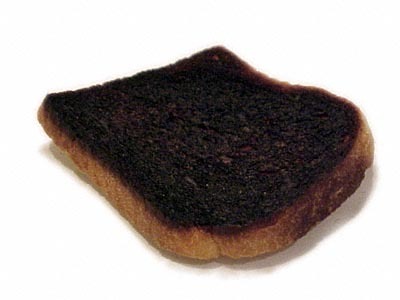
Ustulate a. Scorched. The Superior Person’s word for sunburned.

It's the sure sign of a bad day when you have ustulate toast for breakfast.

Each Tuesday, we’ll offer up a Superior Word for the edification of our Superior Readers, via the volumes of the inimitable Peter Bowler. You can purchase all or any of the four Superior Person’s Books of Words from the Godine website. Ustulate appears in the First.


Friday, April 5, 2013

A Look at Little Free Libraries

by Jodi Bosin

I discovered my first Little Free Library this past summer in my hometown of Philadelphia, on an undisturbed Old City street filled with quiet stores and restaurant suppliers. The freestanding construction on the sidewalk looked like a large birdhouse on a wooden pole. It was filled with books and inscribed with the words “Take a book, leave a book." I was in awe of this small and wonderful structure. Naturally, I returned the next day to engage immediately in its instructions.

Todd Bol's original Little Free Library
in Hudson, Wisconsin
The phenomenon of the Little Free Library began with Todd Bol's beautiful tribute to his bibliophile mother. Three years ago the Hudson, Wisconsin, native put up a miniature schoolhouse on a post outside his home and filled it with books to be borrowed. A few friends followed suit, and today there are thousands of miniature libraries in over thirty countries across the globe.

The Little Free Library movement is now a nonprofit run out of Wisconsin by Bol and his friend Rick Brooks. Their website offers the chance to register a Little Free Library for a small fee and purchase a pre-built model (although creating a library from scratch is always encouraged). Registration offers the chance to be listed on the Little Free Library Map of the World and receive special offers and updates from the organization.

Cambridge's Little Free Library
run by Roberts and Belove
When I returned to Boston, I instantly sought out all the Little Free Libraries in the area (as you may have already done sometime around the last paragraph), and it turns out that we have a few of these small sanctuaries right here in our city. Laura Roberts and Ed Belove are the stewards of the Little Free Library at 1715 Cambridge Street, and the anonymously created library in Jamaica Plain stands at the corner of South and Bardwell. Jan Gardner writes about the Cambridge edition in the Boston Globe:

Roberts has reported to her what she sees from her window. “People are stocking it. People are stopping and talking and taking pictures,” she said. She and her husband supplied the first few piles of books but now others are making donations. On a recent day, “The Old Man and the Sea” by Ernest Hemingway stood next to “Dress Your Family in Corduroy and Denim” by David Sedaris...Roberts and Belove are longtime members of Friends of the Cambridge Public Library. The opening of their own little library is no commentary on its grander relation. “Libraries big and small,” Roberts said. “We love them all."

The full article can be found here.

One might ask, won't the books be stolen, or the libraries vandalized? These things can happen, but a world filled with Little Free Libraries is a world of hope and hungry readers. With Spring coming upon us, it is the perfect time for a pilgrimage to these small treasure troves. Just remember to bring an unwanted book that needs a home.

Tuesday, April 2, 2013

Superior Person's Tuesday!

Nostrificate v. To accept as one’s own. “Don’t lean too far over the edge of the monkey pit, children; they are all too likely to nostrificate you."

Nostrification at its cutest.*

*If you like cute pictures of inter-species friendships, you're in luck – the Internet is loaded with them.

Each Tuesday, we’ll offer up a Superior Word for the edification of our Superior Readers, via the volumes of the inimitable Peter Bowler. You can purchase all or any of the four Superior Person’s Books of Words from the Godine website. Nostrificate appears in the Second.

Monday, April 1, 2013

World Book Night 2013


World Book Night is celebrated around the world on April 23. The purpose of this worldwide event is to encourage more adults to read. In 2012, almost 80,000 people distributed over 2.5 million books in four different countries.

A report by The National Endowment for the Arts, Reading At Risk: A Survey of Literacy Reading in America states that:

For the first time in modern history, less than half of the adult population now reads literature…While oral culture has a rich immediacy that is not to be dismissed, and electronic media offer the considerable advantages of diversity and access, print culture affords irreplaceable forms of focused attention and contemplation that make complex communications and insights possible. To lose such intellectual capability – and the many sorts of human continuity it allows – would constitute a vast cultural impoverishment.

The report also found that reading improves employability, social interactions, mental health, and happiness. It is with this in mind that World Book Night U.S. strives to help non-readers by inspiring them to read.

This year, an independent panel of booksellers and librarians selected 30 books that include classics like Ray Bradbury’s Fahrenheit 451 and Willa Cather’s My Antonia, as well as modern bestsellers such as David Benioff’s City of Thieves and David Sedaris’ Me Talk Pretty One Day. The authors of the chosen books generously agreed to waive royalties, and their publishers agreed to pay the cost of producing the special editions for the event.

Volunteers around the country can apply to be book givers and are chosen based on their ability to reach light and non-readers effectively. It is an amazing opportunity for book enthusiasts to share their passion for reading with those who do not read or do not have proper access to books.

The entire book community comes together for one night each year to promote literacy. While book giver applications are closed for 2013, you can visit the World Book Night website to find out how to become a part of this inspiring movement in the future.


Thursday, March 28, 2013

Surrounded By Books

by Ross Wagenhofer

Some of the books in the Godine office.

I think there may be something about living and sleeping in close proximity to the books one owns. Throughout my life I always have. In my childhood home, in the room where I spent part of my life growing up, there are three bookshelves that hold around 300 various books. The largest bookshelf in the room stands in the corner, and is filled primarily with the books I collected from my readings during middle and high school – lots of Stephen King, Tom Clancy, John Grisham, and Michael Chrichton, although the top two shelves exhibit my changing tastes as I grew up and discovered golden-era science fiction, WWII stories, and a few of the classics.

Across the room stands an equally tall bookshelf, only three of the six shelves devoted to books (the top three contain a meager CD collection, a framed photo of Stevie Nicks, and a Tom Petty vinyl). Among the books on this bookshelf are a hodge-podge of comic books, books of trivia, three Bibles, the entirely of the Left Behind series (of which I was briefly a fan) and things I've never really got around to reading. 

The third bookshelf in the room is a three-shelf unit I purchased from Wal-Mart and assembled myself. I bought it after my freshman year of college to accommodate all the textbooks and novels I had accumulated during that year. It's now completely full of books, many of them the heavy tomes often read in survey courses, and is leaning to the right as a result of my poor carpentry skills.
             
Now that I live in my own apartment, I have stopped sending my books home and instead have begun keeping them in my (small) place. There’s a communal bookshelf that I plucked for free from the side of the road in my living room, but I only have the use of two if its shelves. There’s another small stack of books I attempted to place decoratively on an end table. The rest of the books I own are in my tiny room.

Table, books, and Auden the teddy bear.
I’m neither especially organized nor disorganized, and although I now have a tendency just to make stacks of books as I purchase them, they’re neat stacks. Neat as in they stand up straight, not that there’s any organizing principle about what goes where. I have eight stacks in total, although one is approaching “tower” status and should probably be broken up. After I used up all the room on top of my dresser and small table, I had to resort to just using the floor. All my magazines and the books and research articles I’m using for my honors thesis reside there. Soon to join them will probably be the novels I’m currently reading for class.

A view of my stacks from the bed.
It wouldn’t be particularly difficult to go on Craigslist and find a bookshelf small enough to fit in my room. As it so happens, the location where I have bought and continue to buy a large portion of the books that end up in piles in my room also sells bookshelves (Boomerangs on Centre Street – the finest used book selection of any thrift store I’ve ever encountered). But I’ve found there’s a real charm in literally being surrounded by the books I own. Until I live in a home with a dedicated library room, I’m content with shoving my volumes to fit in my bedroom. I can see them from where I sleep.
             
I’m interested to know how others of you store your books, especially people like me with minuscule-to-small-apartments. Do others stack their books as they get them? Or do you feel that books deserve a library? Share with us by tweeting @GodinePub, sharing a picture of your library on Pinterest, or commenting below!

Tuesday, March 26, 2013

Superior Person's Tuesday!

Cicurate v. To tame, or reclaim from a state of wildness. “Belinda, I’m not having that young man of yours in the house until he’s been thoroughly cicurated.”

The circus lion looked ferocious, but he was as harmless as a kitten once he was cicurated.
Each Tuesday, we’ll offer up a Superior Word for the edification of our Superior Readers, via the volumes of the inimitable Peter Bowler. You can purchase all or any of the four Superior Person’s Books of Words from the Godine website. Cicurate appears in the First.

Friday, March 22, 2013

Handy Tip: Easter Egg Dolls


There are plenty of crafts around Easter, but coloring eggs can get messy, and if no one in the family eats hard-boiled eggs, they can go to waste. To incorporate an egg-themed craft into the holiday without having to boil any eggs or break out the coloring kit, try this activity from The American Girls Handy Book.

The authors of the book preface this activity as a means to mimic the dolls and toys in the toy stores of New York. For those unable to visit the Big Apple or who can’t afford such a luxurious toy, Lina and Adelia Beard recommend this creative Easter craft.

Step 1: Prepare the egg
  • “Begin with several nice large eggs … blown or emptied of their contents
  • To do this, “make a small hole in each end of the shell … put one hole to the lips; then blow, not too hard, but steadily until the egg has all run out of the other end.”
Step 2: Paint the egg
This is where we can get creative with materials or design. For classic, vintage looks, try these instructions:
  • Lay tracing paper over a face from a picture book and trace the lines and features of the face with a soft lead pencil.
  • Place the tracing paper (pencil-side down) on the shell (with the more narrow end of the egg facing down so that it mimics the shape of a face). Transfer the lines by tracing the lines that you’ve drawn on the tracing paper with “a hard pencil” or “knitting needle.”
  • “Touch up and strengthen the features with a fine paint-brush and india-ink” or with the medium of your choice.
Step 3: Decorate
  • Use a small box (or make one) and cut a hole in the bottom large enough to fit the small end of the shell (this supports the head and makes shoulders)
  • Add material for hair if you’d like (The Handy Book suggests raw cotton dyed with india-ink)
  • Create clothing, headdresses, or a hat for your egg doll. This can be done by creating a diagram like the one illustrated in the book, pictured here. Use materials like wrapping or tissue paper.

Be creative with your designs. The authors suggest a few friendly characters seen above, like an owl, Miss Roly-Poly (who cannot be knocked down!), Humpty Dumpty, and so forth. Enjoy!


The American Girls Handy Book, first published in 1887, was written by two of the founders of the Girl Scouts of America. It's a beloved, vintage Americana guide book, filled with activities that transport readers back to a time before TV and are guaranteed to keep kids busy and entertained. You can purchase it on the Godine website.

Tuesday, March 19, 2013

Superior Person's Tuesday!

Jargogle v. To befuddle or mess up. “Congratulations, dearest; I wouldn’t have thought it possible, but you’ve found something else to jargogle.”

Wile E. Coyote always seemed to jargogle his plans to catch the Road Runner.
Each Tuesday, we’ll offer up a Superior Word for the edification of our Superior Readers, via the volumes of the inimitable Peter Bowler. You can purchase all or any of the four Superior Person’s Books of Words from the Godine website. Jargogle appears in the Second.

Monday, March 18, 2013

Women's History Month

Looking for a way to celebrate Women's History Month? Here are three books about – and written by – great women.

Rosemary Verey: The Life & Lessons of a Legendary Gardener by Barbara Paul Robinson

Rosemary Verey was the last of the great English garden legends. Although she embraced gardening late in life, she quickly achieved international renown. She was the acknowledged apostle of the "English style," on display at her home at Barnsley House, the "must have" adviser to the rich and famous, including Prince Charles and Elton John, and a beloved and wildly popular lecturer in America. A child of a generation born between the two World Wars, she could have easily lived a predictable and comfortable life, devoted to her family, church, and horses, but a devastating accident changed her life, and with her architect-husband, she went on to create the gardens at their home that became a mandatory stop on every garden tour in the 1980s and 1990s. At sixty-two, she wrote her first book, followed by seventeen more in twenty years. Her husband's death, shortly after her career began, added a financial imperative to her ambition. By force of character, hard work, and determination, she tirelessly promoted herself and her garden lessons, traveling worldwide to lecture, sell books, and strengthen her network.

During a sabbatical from Debevoise & Plimpton where she was the first woman partner, Barbara Paul Robinson worked as a gardener for Rosemary Verey at Barnsley House. A hands-in-the-dirt gardener herself, she and her husband created their own gardens at Brush Hill in northwestern Connecticut, featured in articles, books, and on television. A frequent speaker, Barbara has published articles in the New York Times, Horticulture, Fine Gardening, and Hortus; she has also written a chapter in Rosemary Verey's The Secret Garden. The gardens can be viewed at www.brushhillgardens.com.

--

Genius of Common Sense: Jane Jacobs and the Story of The Death and Life of Great American Cities by Glenna Lang and Marjory Wunsch

Jane Jacobs, a heroine of common sense, never attended college but her observations, determination, and independent spirit led her to far different conclusions that those of the academics who surrounded her. Illustrated with almost a hundred images, including a great number of photos never before published (with many by Robert Otter), this story of a remarkable woman will introduce her ideas and her life to readers, many of whom have lived in neighborhoods that were saved by her insights.


Glenna Lang's previous work includes illustrations for four classic poems for children with Godine. She wrote and illustrated the award-winning Looking Out for Sarah. Although she grew up in New York City, she lives in Cambridge, Massachusetts, and teaches at the School of the Museum of Fine Arts, Boston.


Marjory Wunsch has illustrated and written numerous children's books. While studying architecture, she encountered problems of urban design, rehabilitation of old buildings, and the ideas of Jane Jacobs. Marjory and her husband live in Cambridge, Massachusetts. 

--

Miss Etta and Dr. Claribel: Bringing Matisse to America by Susan Fillion

What could be more unlikely than this tale of two unmarried sisters, Etta and Claribel Cone, from a German-Jewish family in Baltimore, who amassed one of the major collections of modern art in America? In this touching story, fully illustrated with the work they collected – Picasso, Matisse, Vuillard, Cézanne, and Gauguin – we trace the contours of their lives, made more vivid by author and artist Susan Fillion’s informative text and colorful paintings that Horn Book Magazine has praised as “strong enough to work side-by-side with those of Picasso and Matisse.”

Susan Fillion is an artist and museum educator in Baltimore. Over the years, she has introduced audiences of all ages to the Cone Collection and especially enjoys teaching drawing where it resides, in the galleries of The Baltimore Museum of Art. She and her husband, Tom, live in a house in the trees.

Friday, March 15, 2013

February Review Round-Up

Here at David R. Godine, Publisher, we strive to produce high quality books above all else. So, when our books and authors are praised, we hope you'll forgive us for acting like proud parents. Please join us in celebrating the recent success of a few of our talented authors.

The Poetry Society has announced Naomi Replanski as the 2013 recipient of the William Carlos Williams Award, given each year to a book of poetry written by a single author and published by a small, non-profit, or University Press. On the Poetry Society's website, B.H Fairchild writes:
Replansky has become the master of a Blakean music radically unfashionable in its devotion to song-like meters and the reality and politics of working-class experience. For those of us who came upon her poems half a century ago, the appearance of Replansky's Collected Poems is cause for celebration and, as an expression of deep gratitude and woefully belated recognition, the conferring of the William Carlos Williams Award.
The full text can be seen here, and be sure to find Naomi Replanski's Collected Poems on the Black Sparrow Books website.

Adam Van Doren's book An Artist In Venice - featured in last month's round-up as well - continues to receive high praise. The Boston Globe believes he does justice to a city that has been written about for centuries:
Van Doren, a master of light and grandson of the Pulitzer Prize-winning poet Mark Van Doren, is an amiable companion as he goes about exploring the city, sketchbook and notebook in hand. “An Artist in Venice” (Godine) succeeds as a memoir of discovery and a portfolio of paintings and sketches. His dreamy, richly hued works, none more than six and a half inches tall, are beautifully reproduced.


The full review can be read here.

Ralph Gardner Jr. of the Wall Street Journal also acknowledges the fact that Van Doren is tackling "one of the best-known, and most thoroughly researched, subjects in all of art and literature." Yet Van Doren's paintings, like the city, are easy to love:
...those who fall in love with Venice tend to do so completely. And rapture is easier to portray than mixed emotions. I had a second minor revelation as I examined Mr. Van Doren’s paintings. (He must be doing something right, because I rarely have any revelations, let alone two triggered by the same artist.) Perhaps more than any other city, when you’re painting Venice you’re simultaneously painting nature. New York, by contrast, is a man-made world...But Venice can’t be separated from the sea, which surrounds and more than occasionally engulfs it; or from the interplay of architecture, sea and sky.
Van Doren's paintings demonstrate the manner in which "nature worms its way into the perception of the city," writes Gartner. The author's architectural background provides him with the talent of "insinuating precision with the fewest possible brush strokes." An Artist in Venice is also a memoir, "a lively account of living in the city" and the author's adventures there.

Continue reading Gartner's article here, and find An Artist in Venice on our website.

The New York Daily News recognizes Andrew Alpern's documentation of New York's holdouts, "about 50 bygone-era buildings in Manhattan," in his book Holdouts! The Buildings That Got in the Way. in the full article, you can read  testimonials from residents and see photographs of what some of these holdouts look like.

For a full account of these endangered structures, you can purchase Holdouts! The Buildings That Got in the Way on our website.

More new and noteworthy books can be found on the homepage of Godine's website, along with a host of high quality selections.

Godine Quotables


Tuesday, March 12, 2013

Superior Person's Tuesday!

Toggery n. Collective noun for your togs, i.e., clothing. "So - we're off to the beach and then on to the pictures. Everyone got their toggery?"
The little oysters don their nighttime toggery before tucking into their shells to sleep.

Each Tuesday, we’ll offer up a Superior Word for the edification of our Superior Readers, via the volumes of the inimitable Peter Bowler. You can purchase all or any of the four Superior Person’s Books of Words from the Godine website. Toggery appears in the Third.

Friday, March 8, 2013

On Cards and Letters

I can't recall the last time I've hand-written a letter. A proper letter, at least. I've scrawled tiny thank you notes on equally tiny thank you cards and have written a couple brief get well soon! messages on cards passed around to cheer up sick friends. But I have never, at least in recent memory, taken pen or pencil to paper and drafted an entire letter. In many ways, I'm glad for typewritten and word-processed correspondence. For a project two years ago I attempted to transcribe an original letter of Lord Tennyson's. His scrawl was such that I was only able to make out about every fifth word. His being in the style of the time, I wouldn't say the old poet had bad penmanship, but to my modern eyes, it was nearly indecipherable. (Interjection: Don't get me started on the handwriting of the staff at this house, particular the scratches belonging to its namesake).

The scrawls of our fearless leader.

Despite my inability to translate Tennyson's cramped cursive, I'll admit there was a real excitement to seeing the way he crafted his words on the page. Maybe he was in a rush when he wrote the letter and the illegibility of the writing was due to his heightened emotional state. A similarly written letter done on a typewriter would not have the quickly dashed lines, the 'R's running into the 'L's, and all the 'm's and 'n's appearing nearly identical. Indeed, the reproduction of “Locksley Hall” I also looked at was considerably easier to make out. When you are just dealing with words, neatly typed, you must peer that much further behind them to see the author. With handwriting, all the flourishes, the irregular spacing, the ink made bolder with angry pressure: they're all there as a manifestation of the author's state at the time of writing.

I used to get a card every birthday from my godmother who would fill the left inside page with the most uniform, neat, and consistent cursive writing I'd ever known, or will probably ever know. So perfect was her writing that I suspect I could go back and detect traces of emotion in, say, a slight wobble in the loop of one of her lower-case 'l's or a failure to bring the stem of a 'g' to align with the stem of a 'y.' It was lovely writing of an artistic caliber that I do not possess, nor ever hope to possess. And it always came in a tasteful, lovingly chosen card that I looked forward to receiving each year in the mail.

A greeting card may now be considered old fashioned, but is now especially welcome for just that same reason. Physical letters are always very charming to receive, and I think the return of the greeting card would be a welcome cultural revival. I say lead the charge with Mary Azarian Greeting Cards. These cards use images from Azarian's A Farmer's Alphabet, and include letters such as Apple, Dog, Farm, and Neighbor. Why don't you grab a pack, a nice pen, and surprise a friend or two with a handwritten note? It's only $13.95 for twelve cards, and you can purchase them directly from our website.

What are your letter-writing habits? Have you received or sent a card you really loved recently? Do you think handwriting is a window into someone’s heart? Drop a comment off below or maybe even Tweet us a picture of a beautiful card or letter you’ve received recently.

Wednesday, March 6, 2013

Superior Person's Word of the Week!

Quakebuttock n. A nicely scornful word for a coward.

"If only I weren't such a quakebuttock," thought the Cowardly Lion.
Each Tuesday, we’ll offer up a Superior Word for the edification of our Superior Readers, via the volumes of the inimitable Peter Bowler. You can purchase all or any of the four Superior Person’s Books of Words from the Godine website. Quakebuttock appears in the First.