Wednesday, June 5, 2013

BookExpo America 2013: A Novice's Perspective

by Marissa Litak

Morgan, our sales manager, at the Godine booth

This past week, from May 29 to June 1, BookExpo America (BEA) was held in New York City. And who, you may ask, was lucky enough to go this year with the excellent staff at Godine? This intern! Needless to say, I was thrilled. As a major industry event, I had heard of BEA before (though, I must admit, I was initially a bit lost when people starting throwing the abbreviation around). BEA is a publishing trade show, where everyone gathers together and checks out each other’s work. Publishers get together with booksellers to make sales, and in the last couple of years the public has been permitted to attend on the last day. (For more information on BEA in general, visit bookexpoamerica.com.)

Inside the Javits Convention Center
I joined the staff on Saturday, June 1, for my first taste of BEA. Getting a little lost in NYC and struggling to figure out the subway system were, apparently, included in the package. After finding my way to the convention center with only a modicum of trouble, I picked up my badge and entered the huge glass building with feelings of awe and a little trepidation that quickly faded to excitement. Booths, banners, and bustling people met my eye, a sea of them surrounding me in every direction. It was overwhelming: where to begin? I hitched my tote bag (I had come prepared) up onto my shoulder, took a deep breath, and set out.

Sight upon BEA entry
I explored booth by booth, stopping to talk to people, look at displays, and collect the many freebies being handed out. Seeing the way that “publishing people” interacted with one another was fascinating, and underscored how small of an industry this really is, in that everyone knows everyone else. Forget six degrees of separation; in publishing, it’s more like one or two. Everyone’s booths were set up to display their best titles and projects, and books were everywhere. Stacks of books, shelves of books, books on the floor in both intricate designs and haphazard piles. 

The Godine booth (complete with David sitting in the corner)

I felt a sense of kinship with my fellow literary people, many of whom wore book-related t-shirts such as “Stay Calm and Love Books,” or the Lemony Snicket tee that someone was handing out. Almost all of them, including me, were carting around huge stacks of books. You see, everyone at BEA gives you books. Sure, there are other give-aways, like pins, stickers, pens, t-shirts, the ever-useful tote bag, and even a lunar calendar, but books are the meat and potatoes. Many publishers hand out free galleys, or unpolished copies of books before they’re published. They often say, “Uncorrected Proof, Not for Sale” in big red letters on the cover, and have an outline of the marketing plan on the back. These are the books that get sent out to reviewers, and these are the books that are handed out en masse at BEA.

Morgan and Katie, an intern, enjoy some pizza
to celebrate our new book Pizza in Pienza

It feels amazing to get to read something before it’s released, and even more so when you’re able to get your galley signed by the author. One of the coolest parts of BEA was all of the authors hanging out around their publisher’s booth or the autographing area. I got a few of my galleys signed, one of which I’m particularly excited about. Never Fade, Alexandra Bracken’s sequel to The Darkest Minds, isn’t due out until October. Not only am I reading it early, but I also met Alexandra Bracken. How great is that? I’m also eagerly looking forward to reading Thomas Keneally’s The Daughters of Mars, and Artis Henderson’s memoir Un-Remarried Widow, among the dozen others I acquired at BEA. I even picked up a little something for my parents: When Will My Grown-Up Kid Grow Up? Loving and Understanding Your Emerging Adult, by Jeffrey Jensen Arnett and Elizabeth Fishel. Overall, my first BEA experience was incredible, and I can only hope that I’ll be able to go again in the future.

What authors would you love to meet? Are there any book releases you’re anxiously counting down towards? Leave a comment telling us which Godine books you would want to check out at our BEA booth, or send a tweet @GodinePub on Twitter!

Tuesday, June 4, 2013

Superior Person's Tuesday!

Psittacism n. A string of meaningless, repetitive words. Literally “parrot talk.”

“Now let’s talk about the state of the economy.” The audience groaned at yet another psittacism.
Each Tuesday, we’ll offer up a Superior Word for the edification of our Superior Readers, via the volumes of the inimitable Peter Bowler. You can purchase all or any of the four Superior Person’s Books of Words from the Godine website. Psittacism appears in the Third.

Monday, June 3, 2013

An Ode to the BPL

by Jodi Bosin

The front of the Boston Public Library

A palace for the people, Charles McKim called it. 

The Boston Public Library on Mason Street,
its location from 1854-1858. Image from bpl.org.
The architect's firm McKim, Mead, and White completed their masterpiece one hundred and eighteen years ago. The Boston Public Library, better known as the BPL, had been located first in a former schoolhouse on Mason Street (shown on the right) and then in a building on Boylston Street. Both of these locations were much too small to contain the first large free municipal library in the United States, even in its younger days. In 1854 when the library first opened the collection had about 16,000 volumes; it now holds almost nine million. Indeed, a palace seems the only structure suitable for an urban cave of wonders such as this.

Upon approaching the library, I navigate the streams of pedestrians passing through Copley Square and ascend the thin sheets of steps that surround it. The giant stone building stands majestically before me; skyscrapers rise up behind it but their shining surfaces seem to be made of something less eternal. I step in one of the gaping oval entryways and into a sudden quiet, sheltered from the bustling square beyond. A marble staircase leads upward, under the protective gaze of two sculpted lions and past murals by Pierre Puvis de Chavannes, Edwin Austin Abbey, and John Singer Sargent.

The front stairs

I then enter Bates Hall, my favorite public space in the city of Boston. The ceiling stretches 50 feet high, lined with fifteen large windows and magnificent barrel vault arches. The hall is bordered by bookshelves around its edges and features two long rows of wooden tables with the sort of green lamps remeniscent of a musty grandfather's study. The room exudes comfort and calm, and I have often found it the perfect refuge to study, read, or write surrounded by others doing the same.

Bates Hall

I am proud to count myself among the three million or so that visit the BPL each year. With a wide range of programs, manuscripts, maps, prints, and books, as well as 25 other branch libraries, the BPL is a veritable beating heart. "Boston Pubic Library is a community gathering place, a place for lifelong learning, a place to seek knowledge, solace, and renewal," wrote President Amy E. Ryan in a letter announcing the BPL's reopening following the Boston Marathon events. Charles McKim would be glad to hear it, and thousands of Boston residents would readily agree. We are glad to have it back.

Tuesday, May 28, 2013

Superior Person's Tuesday!

Griffonage n. Careless handwriting, illegible scribble.


With claws like that, his handwriting must be complete griffonage.

Each Tuesday, we’ll offer up a Superior Word for the edification of our Superior Readers, via the volumes of the inimitable Peter Bowler. You can purchase all or any of the four Superior Person’s Books of Words from the Godine website. Griffonage appears in the Second.

Wednesday, May 22, 2013

May is Get Caught Reading Month!

by Katie Turnbloom

Image from getcaughtreading.org.
Founded in 1999 by former Congresswoman Pat Schroeder, Get Caught Reading is a nationwide campaign with the objective to “remind people of all ages how much fun it is to read… and to share that pleasure with the young children in their lives” (getcaughtreading.org). While the core focus of this campaign is to emphasize the joys of reading, particularly for pleasure, their website also discusses how encouraging children to start reading at an early age helps their cognitive development, earn higher test scores, and decreases the likelihood of their dropping out of school later in life. Ultimately, too, and at risk of stating the completely obvious, encouraging and teaching children to read breaks the cycle of adult illiteracy and thus providing greater educational and occupational opportunities. The campaign includes a series of posters where celebrities that kids look up to (both human and cartoon) are "caught" reading - see them all here.

I remember when I was young pretty much the only thing I was caught doing was reading. I loved to read and would devour anything I could get my hands on (although Roald Dahl was, and honestly still is, my absolute favorite). I can even remember going to the book store when I was twelve or thirteen and purchasing Dante Alighieri’s The Inferno – which, as my parents probably expected but didn’t have the heart to tell me, was far too advanced for me at the time; even though it was too much for my preteen self, I was encouraged to return to the text years later to further explore and re-challenge myself.

Matilda Wormwood of
Roald Dahl's classic, Matilda
I consider myself so lucky to have been able to develop my affinity for literature through my bibliophilic family; no matter what was going on we were all reading at least one book. My sister and I were encouraged to read often, much, and without censorship. A memory I remember most vividly is one shared by both my sister and I where night after night our heads rested on the soft, cotton pillows laid in our father’s lap as he read us The Hobbit at bedtime. This is just one of many occasions that I took for granted as a child and one that helped develop strong relationships between myself, literature, and my family. These relationships very much helped in forming my identity, not only in regards to my personal interests but also in my academic and career goals (heck, I’m a masters candidate working towards a degree in children’s literature, if that says anything).

So it saddens me to read that, according to the CIA Yearbook, the United States, our 315 million–plus person country, has a 99% literacy rate, leaving millions of people unable to read, or to do so with extreme difficulty. Not only are these individuals unable to experience literature for its boundary-crossing, world-creating magic, they are also unable to experience the relationships often formed through that literature.

That is why this month, to honor the memories when we at Godine were (and are!) caught reading, we will donate a picture book for every comment this blog post receives to the Waltham Family School of Waltham, MA. This school is committed to teaching illiterate adults the English language and is multi-purposed, helping adults not only read themselves, but to also form a relationship with their children through literature and pass on their enthusiasm for literature and learning to future generations.

So tell us something about your literary selves! What were your favorite books growing up? Your favorite David R. Godine, Publisher books? A book that changed your life? A memory when you were caught reading?  

Tuesday, May 21, 2013

Superior Person's Tuesday!

Prestidigitation n. Sleight of hand. Literally, “quick fingering.”


Prestidigitation? More like “presto”-digitation!

Each Tuesday, we’ll offer up a Superior Word for the edification of our Superior Readers, via the volumes of the inimitable Peter Bowler. You can purchase all or any of the four Superior Person’s Books of Words from the Godine website. Prestidigitation appears in the Third.

Monday, May 20, 2013

The Virtues of Coffee


by Ross Wagenhofer

“Coffee - the favorite drink of the civilized world.” – Thomas Jefferson

One of the most beautiful sights, at least in my opinion, is that of steam rising from a cup of coffee. I often watch it coiling and moving around in the air as I wait for the coffee to cool. There's a great juxtaposition of the steam's white lightness and the black bitterness where it originates.

In my estimation, coffee shares the top spot with alcohol as the most literary drink (my metric for judgement of the literary quality of a drink is the popularity of it among writers, although I suspect actual hard data could reveal booze to be in the number one spot). The caffeine so abundant in coffee is a great legal source of drive and inspiration. Consider Honoré de Balzac, the famed French writer of numerous novels, plays, and stories. He turned to coffee, taken in appalling amounts, to fuel long stretches of intense and focused writing. The amount of coffee he drank slowly turned his stomach ulcerous and caused the left ventricle of his heart to hypertrophy, leading to his early demise at the age of 51.

A cup of brew I enjoyed while at the Massachusetts Library Association conference.

Balzac is an inspiration unique case in the amount of coffee he put into himself, and many other famous writers and figures have sought the drink in lesser amounts. Noted fans include Jonathan Swift, John Van Druten, Oliver Wendell Holmes, and T.S. Eliot. Eliot once said, “I have measured out my life with coffee spoons.” Among some modern celebrities that have publicly declared their fondness for coffee: Hugh Jackman, Lana Del Rey, and Ice Cube.

Coffee is a bitter drink when made poorly, and slightly less bitter when made right. I don't often drink coffee black. I've heard many insist coffee ought to be drank black and with no frills to experience it properly. I agree; it is the same with steak, wine, Shakespeare, paintings, and walks through the forest. And yet, I prefer steak with A1, wine with food and friends, Shakespeare in modern interpretations, paintings hung in ornate frames, and strolls among the trees with musical accompaniment from my iPod. So it is with coffee: I like cream and sugar. If there's shame in that, so be it.

Image credit: broadstreetng.com
I first discovered the inspirational qualities of coffee when working on college entrance applications and writing essay after essay for different scholarships and schools. The average-sized and average quality drip coffee machine in my kitchen became a fountain of lethargy-killing nectar. Once discovered, I never stopped drinking the stuff. Like many freshmen before me, my first year of college startled me with work and busyness, and I turned toward coffee to help me with the myriad essays, tests, and stressful evenings laboring over projects.

Albert Camus once pondered: “Should I kill myself, or have a cup of coffee?” It’s a classic question of existentialism, but perhaps also a statement of the necessity of the black stuff for the Absurdist’s everyday existence. My ongoing wellbeing is certainly connected to coffee.

How do you drink your coffee, and how do you prepare it? (No really, I want to know. I've been thinking of getting a moka pot - it is worth it if I already have a French press?) Drop a comment below or toss us a tweet at @GodinePub on Twitter!

Tuesday, May 14, 2013

Superior Person's Tuesday!

Slumber Room n. The room in which a corpse (sorry, the “departed”) is laid out by a funeral director in preparation for the funeral. Why not add a little spice to family visitations by eschewing the term “guest bedroom” in favor of this somewhat more ambiguous appellation?

In Death at a Funeral, raucous guests bring chaos to the slumber room.
Each Tuesday, we’ll offer up a Superior Word for the edification of our Superior Readers, via the volumes of the inimitable Peter Bowler. You can purchase all or any of the four Superior Person’s Books of Words from the Godine website. Slumber room appears in the Superior Person's Field Guide.

2013 Jane Jacobs Walk: Exploring "Prayer Central"

At the encouragement of national Jane Jacobs Walk leaders (who have been enthusiastic supporters of Genius of Common Sense: Jane Jacobs and the Story of The Death and Life of Great American Cities), Glenna Lang has organized the popular local walk in Cambridge, MA, for the last five years. A version of the following article appeared in the Cambridge Chronicle.

Walkers on Norfolk Street

Cambridge Jane Jacobs Walk Explores “Prayer Central”

Cambridge’s fifth annual Jane Jacobs Walk proved more timely than its organizers had imagined when they planned the route several months ago. On Saturday morning May 4, more than sixty people, led by Charles Sullivan, executive director of the Cambridge Historical Commission, set out from Central Square to explore the layers of history and culture found just north of Massachusetts Avenue between Prospect and Norfolk Streets, Cambridge’s geographic and political center in the early 19th century.

Writer Michael Kenney suggested the theme of this year’s walk, inspired by his Boston Globe article on November 4, 2000, entitled “Prayer Central: Known for Its Curries and Live Music, One Cambridge Neighborhood Is Home To Nearly 60 Congregations.” The area’s diverse and continually changing population is reflected in its surprising number of places of worship.

Charles Sullivan, executive director of the Cambridge
Historical Commission, and Father Gabriel Troy, pastor of St. May
of the Annunciation, address Jane Jacobs Walkers
As the walk began, Kenney pointed out an unassuming storefront Pentecostal church among multi-family dwellings on Norfolk Street. Walkers then headed to St. Mary of the Annunciation, the city’s third and once most important Catholic church, dating from 1866. Over time, St. Mary’s grew to form a complex with two school buildings, a convent, rectory, and gymnasiums for boys and girls. Its programs included a boys’ high school and two-year college, all free to its mainly Irish parishioners. The current pastor, Father Gabriel Troy, invited walkers to view the gloriously refurbished church interior, now home to a largely Spanish-speaking congregation. Appointed to a parish in the Peruvian mountains by Cardinal Cushing, Father Troy – a native of Ireland – is fluent in Spanish and delivers services in both languages.

Around the corner from St. Mary’s, St. Bartholomew’s Episcopal Church was originally built in 1861 as a Methodist church and now serves many families whose shared heritage is from the Caribbean islands. Minka vanBeuzekom, a Cambridge City Councilor on the walk with a copy of Jane Jacobs’s The Death and Life of Great American Cities in hand, called attention to the solar panels on the church roof, which they obtained through a grant for nonprofits.

Cindy Carpenter, a walk participant, informed the crowd about the Temple Beth Shalom, also known as the Tremont Street Shul, which she attends. She described it as special because “it seeks to accommodate different Jewish practices, often offering two services at the same time (egalitarian and traditional), and is not formally affiliated with any of the three main branches of organized Judaism in this country."

Nichole Mossalam, secretary of the Islamic Society
of Boston in Cambridge, speaks with a participant
in Cambridge’s annual Jane Jacobs Walk.
Welcoming the walkers to the Islamic Society of Boston’s Cambridge mosque, Nichole Mossalam, its secretary, led the group through the site. The visitors peered into two prayer rooms with sparsely decorated walls and beautiful rugs covering the floors. Outside the painted tile-like front of the former Knights of Columbus building, erected in 1958, Mossalam described the mosque as unaffiliated with any particular kind of Muslim religion. Worshippers come from countries on at least four continents, and they value inclusiveness. Muslims in the U.S. are becoming part of American life, she said, and “they don’t want to be divisive” in their relations with non-Muslims.

As they headed back to Central Square, many walkers expressed delight in discovering the diverse houses of worship tucked within a few blocks and remarked on the warm reception they had received.

Jane Jacobs Walks honor the memory and spirit of author and urban activist Jane Jacobs.

Begun in Canada the year after Jacobs died in 2006, the walks take place on the weekend closest to her birthday on May 4. Any group or individual can organize a walk and list it on www.janejacobswalk.org. In its seven years, Jane Jacobs Walks have become an international movement with hundreds of walks occurring simultaneously all over the world.

Glenna Lang is a Cambridge, MA, resident and the author, along with Marjory Wunsch, of Genius of Common Sense: Jane Jacobs and the Story of The Death and Life of Great American Cities. Genius of Common Sense is available on the Godine website in both hardcover and softcover formats.

Thursday, May 9, 2013

April Review Round Up

Here at David R. Godine, Publisher, we strive to produce high quality books above all else. So, when our books and authors are praised, we hope you'll forgive us for acting like proud parents. Please join us in celebrating the recent success of a few of our talented authors.

This past month, Kirkus Reviews highlighted two of Godine's upcoming releases. The first book that the magazine praised is The African by J.M.G Le Clézio, a stunning tale of the author's experience moving from Nice, France to a Nigerian village:

A slim yet resonant autobiographical entry from the Nobel laureate’s early years in West Africa.

Le Clézio’s (Desert, 2009, etc.) memoir of his African youth is thin in length yet rich in detail as he reconciles his experience being spontaneously relocated at 8 with his mother and brother from World War II–era Nice, France, to remote Nigeria. As the only whites in a villages of natives, he describes family life crammed into a rustic homestead with paneless windows and mosquito netting—the best the French government could provide to his father, a military doctor. Even without schooling or sports, the author’s cultural enlightenment becomes an explosion of sensations, from the sun-induced bouts of prickly heat to the naked culture’s immodest “supremacy of the body.” Le Clézio writes of liberating his pent-up frustration from being raised fatherless in dreary, wartime Europe on the African savannah, yet his father, the man he’d reunited with in 1948, emerges as the memoir’s beating heart. Restless after medical school, he’d fled Europe for a two-year medical post in Guyana and two decades in West Africa. The author paints his father as pessimistic, lonely, overly authoritative and staunchly repulsed by colonial power, yet happily married. Sadly defeated by time and circumstance, he’d become a stranger and, once relocated back to France, “an old man out of his element, exiled from his life and his passion for medicine, a survivor.” Only in his lyrically articulated hindsight does the author truly appreciate his father’s good work and a unique, memorable childhood.

A vivid depiction of a splintered childhood and the lovely wholeness procured from it.
The African will be available this summer; you can learn more about it on our website.

Kirkus also reviewed Pizza in Pienza, a delightful read filled with colorful illustrations and information on the history of a simple Italian creation that Americans have come to love:

A little Tuscan girl introduces readers to her hometown of Pienza and her favorite food, pizza.

Simple, declarative sentences take readers from Queen Margherita of Italy, circa 1889, to the streets of Pienza, where life “is still pretty old-fashioned,” to a brief history of the pizza. “[P]izza as we know it,” she says, “was really born in Naples,” but she goes back even further to inform readers that the ancient Greeks and Italians ate flatbreads before moving on to discuss classic pizza ingredients and the invention of the pizza Margherita. The first pizzeria in the United States opened in New York City in 1905, she continues, but pizza did not become popular around the country until after World War II: “Now there is pizza in Pienza… / …and all around the world!” Her ingenuous voice is matched by equally enthusiastic, folk-style artwork, which looks to be made with oil pastels and is dominated by warm, Tuscan colors. Fillion spices the illustrations with humor, pairing a black-clad nonna on a bicycle to a modish young woman on a Vespa on one page and planting a demurely held slice in Mona Lisa’s left hand on another. The English text appears above an Italian translation on every page, and the story is supplemented by an author’s note, a pronunciation guide, a two-page history of pizza and a recipe.

Both tasty and just filling enough, just like a slice of pizza Margherita.
Look out for Pizza in Pienza, available on our website this summer. In the meantime, check out godine.com for more of our recent and upcoming arrivals!


Tuesday, May 7, 2013

Superior Person's Tuesday!

Sackbut n. A medieval instrument, not unlike a trombone. The term is derived from an old French world for a hook used to pull a man off a horse. Make what you will of this.

In recent years, the sackbut has become very popular at lavish New York dinner parties.
Each Tuesday, we’ll offer up a Superior Word for the edification of our Superior Readers, via the volumes of the inimitable Peter Bowler. You can purchase all or any of the four Superior Person’s Books of Words from the Godine website. Sackbut appears in the Second.

Monday, May 6, 2013

Hiding From Distraction: My Favorite Reading Spots


by Ross Wagenhofer

When I was younger, I read a lot on the school bus. It was a designated time where nothing was happening and I had nothing to do but either talk with my brother, play Pokèmon, or read. Of those choices, reading almost always trumped the others. It was the perfect way to escape the monotony of the daily bus ride home. I was eager in high school to ditch the bus for a car, and it wasn’t until senior year that I began missing those thirty-five minutes of time where I had all the freedom just to read, mostly distraction free. I didn’t get back that dedicated reading time until I moved out of my college dorms to Jamaica Plain, a good twenty-minute subway ride into the city. Reading has once more been my go-to source of overcoming the tedium of my every-day commute.

The subway isn’t the only place I love to read, of course, but it’s one of the best. My trip from home to campus or work is exactly long enough for a single magazine feature or a short story from a literary magazine. If I just have a book on me, I’m sometimes hesitant to read it on the subway out of fear that I may be interrupted by my arrival just as I’m getting into a good part. But with short form writing, my trip time is ideal. I now always carry both a magazine (or literary journal) and a book with me at all times to suit my reading location.

A moving train is one of the best places to read because it’s boring, mostly free of distractions, and away from either television or the internet. Sometimes (only sometimes, though), I wish for a longer train commute so I had even more perfect reading time. Since being in college, I’ve found myself a victim of the now-ubiquitous 21st century plague of distraction. I used to be good at tuning out the noise around me and ignoring the pull of the TV and the computer, but I’ve lapsed considerably with these skills the past few years. I’ve had to cultivate strategies, and most importantly, places to help me hide from distraction.

Emerson's Iwasaki Library (Credit: emerson.edu)
My college library, first and foremost, is one of the most beautiful places to find solitude. It’s a deceptively large space, despite being nestled away on the third floor of a building in downtown Boston, and has numerous nooks and spots where one can hide away. I can go hours in the evening there with little indication of an outside world.

Besides the library, the second best place I’ve found to read is on my bed, the classic spot. I’ve tried my desk, but with my computer and charging phone right there in front of me, I can often be pulled away by the blinking indicator LEDs now affixed to nearly every electronic device. My bed is the perfect distance away – near yet far – and is comfortable enough to sustain even the lengthiest of forays into a separate literary world.

The Thinking Cup (Credit: yelp.com)
And third is the coffee shop. I used to be very resistant to the idea of using a café as a place to read or write, as I tended to think of the people who I saw in those places being more exhibitionist than otherwise. I’m the kind of person who will remove a dust jacket or hide a magazine cover to avoid conversation about what I’m reading, detesting the interruption. But the coffee shop has become a favorite spot of mine for a couple of reasons. The proximity to quality coffee is a large draw. While I’m not dependent on coffee, I might say I’m reliant on it; it’s often a useful friend to lean on. Second, cafes and coffee houses offer a space away. The library serves a similar purpose, but I can always count on stopping into any coffee place in any part of the city, or a different city, and having a roughly similar environment.

Where do you like to read, and how? How best can one either drown out distraction or escape it? Drop us a comment below or share a tweet with us at @GodinePub!

Friday, May 3, 2013

Crime and Puzzlement 2 - The App!


We are very pleased today to announce that Crime and Puzzlement 2 is now downloadable in app form, and for only $1.99! The sequel to Crime & Puzzlement by award-winning mystery author Lawrence Treat lets you again match your detecting powers in 24 brand new cases, available for the iPhone (including full compatibility with iPhone 5 / iOS 6) and iPad (incl. iPad Mini).

Alone (or was he?) in his locked room. Torrick the truckdriver succumbed, but to what, and why? Arthur, on his way downstairs for another drink, slipped, or did he? Siegfried Jones was obviously knifed on his way to the operation room, but by whom?

  •  Read the story
  •  Ponder the picture
  •  And solve it yourself!

With the applause for Crime and Puzzlement still ringing in his ears, Lawrence Treat has conjured up an even more addictive and fiendishly delightful encore. Who finished Isabelle Spiegel? Why did Mr. Grange topple dead from his saddle, and what was the catch in Mr. Fishhead's alibi? It's up to you, the armchair detective, to find out!

If you cut your detecting teeth on Crime and Puzzlement, you'll sink them again into Crime and Puzzlement 2 with glee... Once again, YOU ARE THE DETECTIVE!

Watch a video of the app in action:


Here are some screenshots:


Down the app from the iTunes app store here – it's available in English, Spanish, French, German, and Japanese!

Tuesday, April 30, 2013

Superior Person's Tuesday!

Parisology n. The deliberate pursuits of ambiguity in one’s use of language.

A true Renaissance man, Ben Franklin was an expert in the field of Parisology.
Each Tuesday, we’ll offer up a Superior Word for the edification of our Superior Readers, via the volumes of the inimitable Peter Bowler. You can purchase all or any of the four Superior Person’s Books of Words from the Godine website. Parisology appears in the First.

Monday, April 29, 2013

An Intern's Observations

by Katie Turnbloom

Frances Hodgson Burnett's observant robin-on-the-wall
in The Secret Garden
A while back, one of my supervisors joked with me, saying that I’ve had the opportunity to be a “fly on the wall… but an interactive fly!” (or Ben Weatherstaff's robin redbreast on the wall, if we're looking at Godine's edition of Burnett's The Secret Garden) with all of the meetings and out-of-office experiences I’ve been able to observe. And it’s true, in my time as an intern here at David R. Godine, Publisher, I’ve had the privilege of meeting people who occupy all ends of the literary world, the ends that stretch beyond the walls of our tiny Boston office, across the country, and towards bookshelves around the world: from buyers to authors and illustrators (and those aspiring to become such), curators, librarians, bloggers, reviewers, academics, ever-devoted interns, and amazing warehouse workers.

I’ve met and spoken with a vast group of people who encourage a book to thrive, from the very beginning when in the diligent hands of those in the publishing house, to the brave literary patriots (the librarians, buyers, reviewers, sellers, and so many others) who encourage the texts into the hands of loyal readers. Each profession takes on a different role in the life of a book; each is responsible, in myriad ways, for the birth of the book, the growth, the nourishment that allows a text to thrive and, in a best-case scenario, become timeless.

Despite their different responsibilities in the literary world, they intertwine on multiple levels, each being a significant link in the literary chain that connects reader and text. Yes, the business side is important – we have families to provide for, student loans to pay, new books to buy – but in my experiences speaking with the literary enthusiasts we work with here at Godine, the emphasis is still on the book.

One children’s book author expressed her concerns over lunch with David and I one afternoon about how her characters and settings would best capture the essence of the peoples and environments they are meant to emulate and how the visual text, or the illustrations, would effectively narrate the cultural atmosphere in her most recent manuscript. To this David replied that, of course, only an artist who knows the setting and has experienced the culture should be illustrating this particular text; the artist must not just have a vision, but also a relationship with the characters and setting.

Other raised concerns interrogate how books relate to people, where the humanity is in them, what these books actually say. Of utmost importance, too, here at Godine will always be, as it has been for over forty years, the quality of the physical book; Godine readers have come to expect great narratives (cloth)wrapped and (foil)stamped in the highest quality of production materials. On the two sales calls I’ve sat in on, Morgan, our sales manager, only has to let the buyer hold the book and flip through its pages to prove that book needs to be on their shelves. Godine is committed to quality – and our readers know quality.

The people we work with here in our Boston office, our Jaffrey warehouse, and expansively beyond our walls are book people. And at the end of the day it is our relationship with books that keep the gears churning and chain strong: between author/illustrator and their texts; texts and readers; and readers with, and as, librarians, teachers, bloggers, reviewers, theorists, curators, buyers, and, of course, other readers. After all, what good would it do striving to fulfill a motto as strong as “Books that matter, for people who care” without arming ourselves with anyone but those who are most devoted to literary quality for the sake of both the book and, of course, the reader?

Tuesday, April 23, 2013

Superior Person's Tuesday!

Touch Signature n. A dactylogram, i.e., a fingerprint.

A young researcher carefully prepares a colorful touch signature for analysis.
Each Tuesday, we’ll offer up a Superior Word for the edification of our Superior Readers, via the volumes of the inimitable Peter Bowler. You can purchase all or any of the four Superior Person’s Books of Words from the Godine website. Touch signature appears in the Superior Person's Field Guide.

Friday, April 12, 2013

Childhood Adventures

by Ross Wagenhofer

I recently read Winter Holiday, the fourth book in Arthur Ransome’s Swallows and Amazons series. Ransome is the sort of author who is able to capture the imagination of childhood and put in on the page without needing to declare this is a children’s story. In Winter Holiday, a troupe of kids plan and carry out an expedition to the “north pole.” Only in Ransome’s words, it isn’t the “north pole” but the North Pole, quotation marks absent.

I dearly wish I had read these books when I was much younger. Winter Holiday made me nostalgic for a childhood I had all but forgotten about: the large-scale adventure played out in the mind, the thrill that came with simple occurrences and new places, and the unique comradery of others who helped to construct and share, as if psychically, an imaginative world. Reading Ransome’s book made me remember the trips to the “volcano” down the street in suburban Iowa, or the construction of new “homes” out of left-behind construction palates and broken boards.  I remember now when the exploration of the woods behind my grandparent’s home in small-town Iowa was as important a quest as the search for El Dorado through the rainforest, each discarded old tire and tossed aside milk carton another path marker on our way deeper into the unknown wilderness.

Message at Cache Island (from the book)
Reading Winter Holiday as a kid would have been like reading a guidebook. I would have found inspiration in the notion of planning a wintertime trip to the North Pole, may have perhaps rounded my friends together and organized a trip to our own North Pole. I would have also been delighted by Ransome’s style of writing and storytelling. My early childhood reading habits was marked more by volume than by genre or type of book. After picture books I moved straight to things like Harry Potter and Redwall, eating up voraciously these series each made up of lengthy volumes. I wasn’t satiated by shorter books and flimsy adventures; I wanted full-on novels that told complete and engrossing stories.

There’s a large audience of kids who are rabid about reading longer books. The Swallows and Amazons series would have appealed to me, and kids like me, greatly. Even as an adult I find them fun reads with a very charming and likeable cast of characters.

What kinds of adventures did you have as a kid growing up? Did you visit any far off places as well? Drop us a comment below or share a tweet with us at @GodinePub! You can find the entire Swallows and Amazons series on our website, and even a biography of the series' author, Arthur Ransome. Winter Holiday is in the process of being reprinted, but in the meantime you can purchase it as an ebook on Google Play.

Wednesday, April 10, 2013

March News and Review Round Up

Here at David R. Godine, Publisher, we strive to produce high quality books above all else. So, when our books and authors are praised, we hope you'll forgive us for acting like proud parents. Please join us in celebrating the recent success of a few of our talented authors.

First and foremost, we are honored to announce Joe McKendry's One Times Square: A Century of Change at the Crossroads of the World as a winner of a New York City Book Award for 2012.


For a firsthand look at his beautiful illustrations, find One Times Square on our website.

This past March there were also a host of positive reviews of Godine's books. Photo Life magazine praises not only the formal beauty of the photographs in Karsh: Beyond the Camera but also the book's illuminating content:
. . . this book features many of his beautiful black-and-white photographs. In addition to that, Karsh: Beyond the Camera includes the background stories of the portrait session when the images were taken. This enjoyable text provides insight into how Karsh so successfully connected with his subjects and established a high degree of trust through his "gift for interpersonal exchange and an inquisitive temperament."
There was also a review of Karsh: Beyond the Camera in The Antioch Review, which concurs on the power of the commentary, both from the photographer himself as well as from photo curator David Travis. Travis "places the image in a historical context, but also has the ability to articulate what is special in a photograph and what was involved in getting the image," and his reflections slow the experience of looking at the portraits to thus allow them to speak more forcefully.

We were pleased to celebrate the beauty of Karsh on March 27th in an event at the Fairmont Copley Plaza, put on by the Canadian Consulate. It was a great event, filled with stories about the famous photographer from those who knew him best, including his widow, Estrellita Karsh, and long-time assistant Jerry Fielder.

Estrellita Karsh and David Travis, editor of Karsh: Beyond the Camera.

To learn more, you can purchase Karsh: Beyond the Camera on our website.

Connecticut Today delves into the history of Adam Van Doren's artistic career and shares some of his insights behind the illustrations for An Artist in Venice:
"I saw the buildings as works of art unto themselves and was less interested in their technical aspects," says Van Doren . . ."Venice is conducive to the experience of painting," he says. "It's meditative, with unusual light at all times of the day. There are no tall buildings so you have unobstructed panoramas. You can disappear in time, with no reminders of modernity except tourists."
Read the full article for more of Van Doren's thoughts and past experiences. The book can be found here.

Barbara Paul Robinson continues to be applauded for her brilliant biography Rosemary Verey: The Life and Lessons of a Legendary Gardener. The gardening publication Historic Gardens Review contrasts the pristine picture of Verey painted by another book with the "darker side of Verey" that Robinson describes. The review goes on to say that:
Robinson's crisp narrative emphasizes that in spite of the showbiz element (Elton John was one high-profile client) Verey's work should not be forgotten and was underpinned by considerable scholarship.
Find Rosemary Verey: The Life and Lessons of a Legendary Gardener on our website, and take a look a the homepage of Godine's website for many more new and noteworthy selections!

Tuesday, April 9, 2013

Superior Person's Tuesday!

Ustulate a. Scorched. The Superior Person’s word for sunburned.

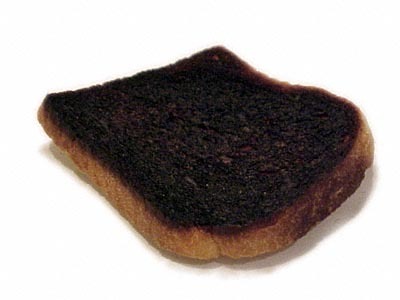
It's the sure sign of a bad day when you have ustulate toast for breakfast.

Each Tuesday, we’ll offer up a Superior Word for the edification of our Superior Readers, via the volumes of the inimitable Peter Bowler. You can purchase all or any of the four Superior Person’s Books of Words from the Godine website. Ustulate appears in the First.


Friday, April 5, 2013

A Look at Little Free Libraries

by Jodi Bosin

I discovered my first Little Free Library this past summer in my hometown of Philadelphia, on an undisturbed Old City street filled with quiet stores and restaurant suppliers. The freestanding construction on the sidewalk looked like a large birdhouse on a wooden pole. It was filled with books and inscribed with the words “Take a book, leave a book." I was in awe of this small and wonderful structure. Naturally, I returned the next day to engage immediately in its instructions.

Todd Bol's original Little Free Library
in Hudson, Wisconsin
The phenomenon of the Little Free Library began with Todd Bol's beautiful tribute to his bibliophile mother. Three years ago the Hudson, Wisconsin, native put up a miniature schoolhouse on a post outside his home and filled it with books to be borrowed. A few friends followed suit, and today there are thousands of miniature libraries in over thirty countries across the globe.

The Little Free Library movement is now a nonprofit run out of Wisconsin by Bol and his friend Rick Brooks. Their website offers the chance to register a Little Free Library for a small fee and purchase a pre-built model (although creating a library from scratch is always encouraged). Registration offers the chance to be listed on the Little Free Library Map of the World and receive special offers and updates from the organization.

Cambridge's Little Free Library
run by Roberts and Belove
When I returned to Boston, I instantly sought out all the Little Free Libraries in the area (as you may have already done sometime around the last paragraph), and it turns out that we have a few of these small sanctuaries right here in our city. Laura Roberts and Ed Belove are the stewards of the Little Free Library at 1715 Cambridge Street, and the anonymously created library in Jamaica Plain stands at the corner of South and Bardwell. Jan Gardner writes about the Cambridge edition in the Boston Globe:

Roberts has reported to her what she sees from her window. “People are stocking it. People are stopping and talking and taking pictures,” she said. She and her husband supplied the first few piles of books but now others are making donations. On a recent day, “The Old Man and the Sea” by Ernest Hemingway stood next to “Dress Your Family in Corduroy and Denim” by David Sedaris...Roberts and Belove are longtime members of Friends of the Cambridge Public Library. The opening of their own little library is no commentary on its grander relation. “Libraries big and small,” Roberts said. “We love them all."

The full article can be found here.

One might ask, won't the books be stolen, or the libraries vandalized? These things can happen, but a world filled with Little Free Libraries is a world of hope and hungry readers. With Spring coming upon us, it is the perfect time for a pilgrimage to these small treasure troves. Just remember to bring an unwanted book that needs a home.

Tuesday, April 2, 2013

Superior Person's Tuesday!

Nostrificate v. To accept as one’s own. “Don’t lean too far over the edge of the monkey pit, children; they are all too likely to nostrificate you."

Nostrification at its cutest.*

*If you like cute pictures of inter-species friendships, you're in luck – the Internet is loaded with them.

Each Tuesday, we’ll offer up a Superior Word for the edification of our Superior Readers, via the volumes of the inimitable Peter Bowler. You can purchase all or any of the four Superior Person’s Books of Words from the Godine website. Nostrificate appears in the Second.

Monday, April 1, 2013

World Book Night 2013


World Book Night is celebrated around the world on April 23. The purpose of this worldwide event is to encourage more adults to read. In 2012, almost 80,000 people distributed over 2.5 million books in four different countries.

A report by The National Endowment for the Arts, Reading At Risk: A Survey of Literacy Reading in America states that:

For the first time in modern history, less than half of the adult population now reads literature…While oral culture has a rich immediacy that is not to be dismissed, and electronic media offer the considerable advantages of diversity and access, print culture affords irreplaceable forms of focused attention and contemplation that make complex communications and insights possible. To lose such intellectual capability – and the many sorts of human continuity it allows – would constitute a vast cultural impoverishment.

The report also found that reading improves employability, social interactions, mental health, and happiness. It is with this in mind that World Book Night U.S. strives to help non-readers by inspiring them to read.

This year, an independent panel of booksellers and librarians selected 30 books that include classics like Ray Bradbury’s Fahrenheit 451 and Willa Cather’s My Antonia, as well as modern bestsellers such as David Benioff’s City of Thieves and David Sedaris’ Me Talk Pretty One Day. The authors of the chosen books generously agreed to waive royalties, and their publishers agreed to pay the cost of producing the special editions for the event.

Volunteers around the country can apply to be book givers and are chosen based on their ability to reach light and non-readers effectively. It is an amazing opportunity for book enthusiasts to share their passion for reading with those who do not read or do not have proper access to books.

The entire book community comes together for one night each year to promote literacy. While book giver applications are closed for 2013, you can visit the World Book Night website to find out how to become a part of this inspiring movement in the future.